When a shutdown window is fixed, a new line is being installed, or peak season hits, rental forklifts can be the quickest way to add lifting capacity without long procurement cycles. In Sarawak, a smooth rental usually depends on three practical factors: availability, support, and lead times.
This article is for plant managers, project managers, and procurement teams comparing Forklift Rental Sarawak options. It explains what affects fleet availability, what support should include beyond a hotline, how to estimate realistic lead times, and what to prepare so delivery and handover don’t slip your schedule.
The goal isn’t to quote prices or promise timelines, but to help you ask the right questions and compare providers based on uptime and safety.
Why forklift rental planning in Sarawak is different from “just book and deliver”
Rental decisions often start with tonnage and budget, but issues usually show up later: a mast that can’t reach the pick height, a forklift that can’t turn in your aisles, tyres that don’t suit a wet yard, or a breakdown with no technician available. Sarawak also spans urban industrial zones and remote sites, which can change transport planning and service response.
Plan around:
- Application fit: indoor vs outdoor, floor condition, racking height, attachments, and typical load type.
- Site constraints: access roads, dock design, container unloading approach, overhead clearance, and floor loading limits.
- Support readiness: maintenance capability, spare parts access, replacement options, and escalation paths.
- Scheduling reality: lead time for the right configuration, transport, pre-delivery checks, and operator familiarisation.
Proximity helps, but “near me” doesn’t guarantee the right forklift is available, supported, and ready on your start date.
Availability: what determines whether the right forklift is actually available
Availability means the provider can supply your required configuration, rental-ready, within your timeframe. Treat it as a match across five dimensions:
1) Capacity and load centre requirements
A 3-ton forklift may not safely handle a 3-ton load if the load centre is extended (long pallets, coils, bulky crates). Many requests list capacity but omit load dimensions, which forces “closest match” proposals and can create workarounds.
Action you can take: share typical pallet size, load length, and any off-centre handling. If you need attachments (paper roll clamp, side shifter, fork positioner), specify them early because they affect both capacity and availability.
2) Power type: diesel/petrol vs electric vs lithium
Power type quickly narrows the pool. Diesel and petrol units are common for outdoor or mixed-terrain work. Electric forklifts suit indoor warehouses and areas where emissions and noise should be lower. Lithium units can support longer runtime and opportunity charging, but may be less common in some rental fleets.
Action you can take: define where the forklift will operate (indoors/outdoors), any ventilation or noise constraints, and your charging/refuelling setup. For electric, share shift pattern and whether charging breaks are realistic.
3) Mast type and lift height
Similar-rated forklifts can have very different mast configurations. You need enough lift height for racking, but also the right collapsed mast height for doorways and overhead clearance. Container entry adds another constraint.
Action you can take: provide highest pick height, door/overhead clearance, and whether the truck must enter containers.
4) Tyres, terrain, and environment
Not every rental unit is configured for wet yards, uneven ground, or sensitive flooring. Tyre type affects traction, turning, and floor protection.
Action you can take: describe ground condition and restrictions (marking, dust, abrasion). Include ramps/gradients and outdoor loading in rain.
5) The “rental-ready” condition of the fleet
Even if a unit exists, it may be in service, due for preventive maintenance, or awaiting inspection/battery work. Strong pre-delivery checks improve safety and reliability, but can limit last-minute availability for niche specs.
Action you can take: ask what “rental-ready” includes (inspection checklist, safety devices, forks condition, battery health for electric units) and whether a replacement unit is available if your assigned forklift is delayed.
Lead times: what to expect and what really causes delays
Lead time isn’t just a delivery date. The timeline typically includes requirement confirmation, unit assignment, inspection, transport planning, site induction, and handover. Delays most often come from incomplete requirements, underestimated site access, or extra time needed to configure a unit (attachments, tyres, battery readiness).
Common lead-time drivers (and how to reduce them)
- Specification changes: switching power type, adding an attachment, or increasing lift height after booking may require a different unit.
- Transport complexity: tight roads, limited unloading space, and restricted delivery hours add coordination steps.
- Site readiness: no clear unloading area, no responsible receiver, or incomplete induction requirements can delay handover.
- Battery and charging planning (electric units): runtime expectations, charger compatibility, and battery condition should be aligned before dispatch.
- Peak demand windows: shutdowns and project mobilisations can tighten availability for common capacities.
Action you can take: treat lead time like a small project. Create one scope document (loads, lift height, environment, constraints, schedule) and share it with every provider you compare.
Practical example: shutdown support with a tight mobilisation window
In a plant shutdown, you may need to move crated components from a staging yard into a workshop. If you book based only on capacity, the delivered unit may not safely lift the longest crate at the required load centre. A replacement might exist, but could need different tyres for a wet yard, adding prep time and downtime.
The fix: share load dimensions, average and maximum weight, yard conditions, and required lift height upfront so the provider can allocate and prepare the correct unit before transport.
Support: what “rental, repair, and maintenance” should include
Support determines whether a breakdown becomes hours or days of downtime. Compare providers on what is included in service, how faults are reported, and what happens if the unit can’t be repaired quickly on-site.
Strong support typically has three layers:
1) Preventive maintenance approach
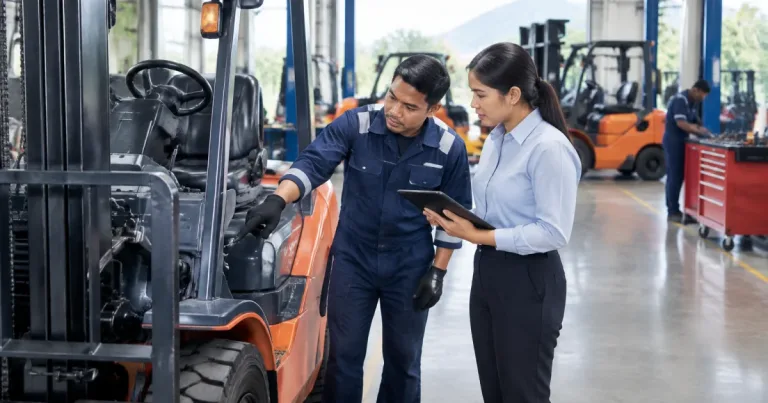
Rental fleets should follow scheduled servicing and safety checks. For long-term rental, clarify how preventive maintenance fits your operating hours and whether visits can be scheduled during low-impact windows.
Questions to ask:
- How is preventive maintenance scheduled for long-term rentals?
- What pre-delivery checks are completed (brakes, steering, hydraulics, horns, lights, seatbelt, reversing alarm)?
- For electric units, what is checked for battery condition and charging performance?
2) Breakdown response and escalation
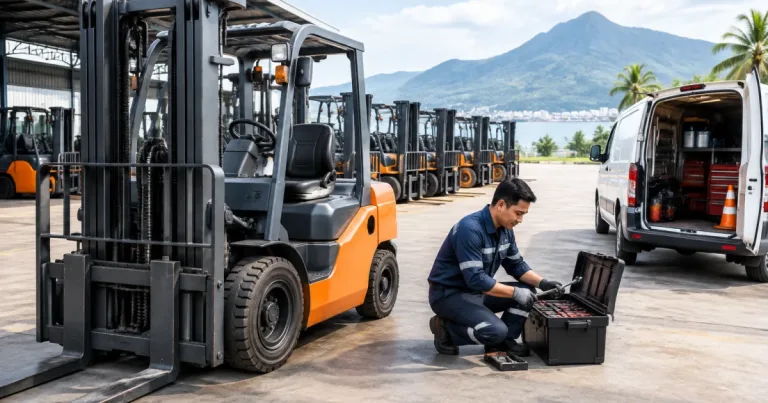
Clarify the reporting process and what information speeds diagnosis (error codes, photos, operating conditions). Ask whether a technician is dispatched first and whether a replacement unit is an option for critical operations.
Questions to ask:
- What is the process for reporting a breakdown, and what details are needed?
- Is on-site troubleshooting standard, and what happens if parts are needed?
- Are replacement forklifts available, and under what conditions?
3) Spare parts, wear items, and downtime risk
Wear items (tyres, forks, chains, hoses, brake components, battery connectors) can cause downtime if not addressed early—especially in harsh or high-utilisation environments. A provider with strong technical capability and parts access reduces disruption.
Action you can take: share shift pattern and conditions (dust, humidity, rain exposure) to justify proactive check-ins where needed.
Choosing the right equipment for the job: forklift, reach truck, or warehouse alternatives
Many comparisons focus only on counterbalance forklifts. In warehouses, different equipment categories may be safer and more efficient—especially when aisle width and racking height are the real constraints.
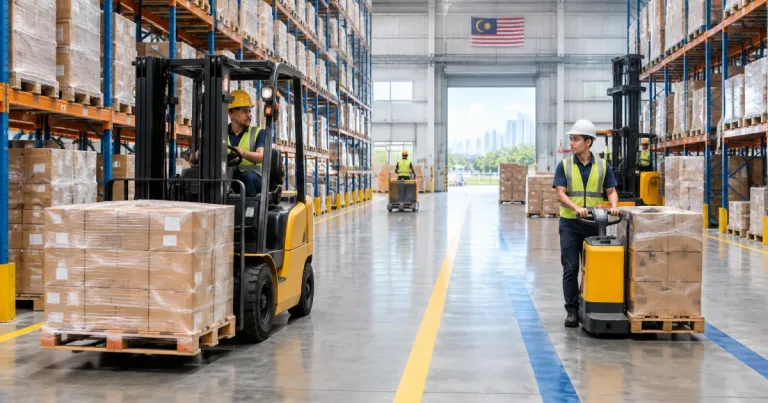
Counterbalance forklift (diesel/petrol/electric)
Best for general loading/unloading, yard work, and flexible movement. Consider tyre type and turning radius for your layout. Electric models suit indoor work and reduce fumes and noise versus internal combustion options.
Reach truck
Designed for high-level storage and narrower aisles. If most work is placing/retrieving pallets in racking, reach trucks can outperform counterbalance units there, but they’re typically less suitable for uneven outdoor yards.
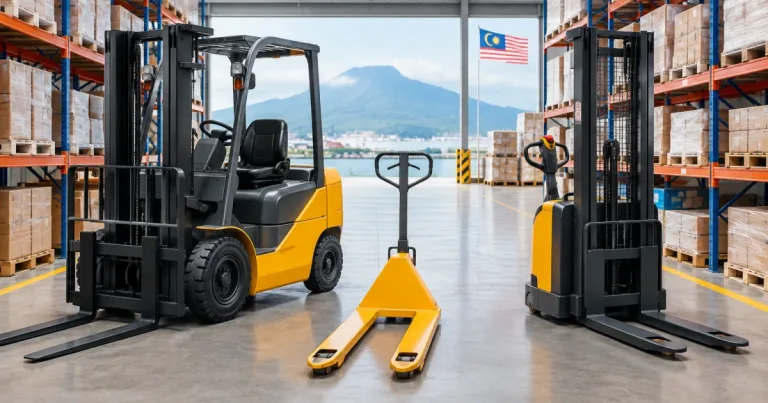
Electric pallet jacks and stackers
For short moves, staging lanes, and lighter lifting, powered pallet trucks or stackers can reduce the need for a full forklift, especially where space is tight.
Actionable comparison tip: map your top three movements (e.g., unload container → staging; staging → racking; racking → dispatch) and choose equipment that fits the narrowest, most constrained step.
How to evaluate rental providers: a procurement checklist that reduces surprises
Use one checklist for all providers so quotations and discussions stay comparable.
Scope and specification checklist
- Load: maximum and typical weight, load dimensions, load centre considerations.
- Lift: required lift height, mast type preference, collapsed height limits, container entry needs.
- Environment: indoor/outdoor split, floor type, gradients, wet yard exposure, dust.
- Schedule: rental duration, shift pattern, peak usage hours, planned downtime windows.
- Power: diesel/petrol vs electric preference, charging access, refuelling constraints.
- Attachments: side shifter, fork positioner, clamps, longer forks, special handling needs.
Operational support checklist
- Support coverage: breakdown handling, escalation contacts, onsite response approach.
- Preventive maintenance: scheduling, access requirements, ability to align with operations.
- Replacement plan: what happens if the forklift can’t be repaired quickly.
- Operator readiness: whether handover includes model-specific operating guidance and safety reminders.
Commercial clarity checklist
Even without pricing comparisons, you can assess clarity:
- What is included (maintenance, breakdown support, inspections)?
- How are transport and delivery coordinated?
- What are your responsibilities (daily checks, fueling/charging, operator requirements)?
- How are damages and wear items assessed and communicated?
Practical example: comparing two “similar” rental offers
Two providers may quote similar capacity and rates. Provider A includes preventive maintenance and a clear replacement plan for critical failures. Provider B requires return-to-workshop for some repairs and does not specify replacement availability. In a high-utilisation plant, Provider A can reduce disruption even if headline figures look close.
Site readiness: what to prepare before the forklift arrives
Delivery day becomes a bottleneck when the site isn’t ready. A small amount of planning can prevent expensive delays.
Prepare a simple “handover pack”
- Delivery contact: name and phone number of the person receiving and signing.
- Site access notes: gate procedure, security requirements, delivery windows.
- Work zone: where the forklift will be unloaded and parked.
- Operating constraints: speed limits, pedestrian zones, charging area for electric units.
- Emergency plan: how to report faults and stop unsafe operation.
Operator preparation and daily checks
Reliability improves when operators follow pre-shift checks, report issues early, and operate within rated limits. If the rental model differs from what your team uses, allow time for familiarisation during handover. If formal operator training is required, schedule it as part of mobilisation.
Electric forklift readiness (charging and runtime planning)
If renting an electric forklift for Sarawak warehouse work, confirm:
- Where it will charge safely (ventilation, protection from water exposure, cable management).
- Who connects/disconnects charging equipment.
- Your shift pattern and whether opportunity charging is possible.
These details influence uptime and battery health, and help the provider match the right unit and battery setup.
Lead-time planning for short-term vs long-term rental
Rental duration changes what to prioritise.
Short-term rental (days to weeks)
Short-term rentals are often driven by urgent needs such as overflow volume, an owned-unit breakdown, or a short project. Speed matters, but mismatch risk is high if scope is unclear.
What to prioritise:
- Correct spec matching (capacity, load centre, lift height, tyres, attachments).
- Clear delivery scheduling and site readiness.
- Breakdown reporting process and a replacement plan for critical work.
Long-term rental (months and ongoing)
Long-term rental is closer to outsourcing part of your fleet. Preventive maintenance planning, parts support, and consistent service typically matter more than day-one delivery speed.
What to prioritise:
- Maintenance scheduling aligned with your production calendar.
- Periodic condition checks for high-utilisation environments.
- Flexibility to scale fleet size up/down as volumes change.
How AM Forklift Sdn. Bhd. can support forklift rental planning in Sarawak
When comparing providers, look for a partner that can support the full lifecycle: selecting suitable equipment, delivering it ready for work, keeping it running, and scaling capacity as operations change.
AM Forklift Sdn. Bhd. provides material handling solutions including forklift rental, repair and maintenance support, and access to multiple equipment types—electric and lithium battery forklifts, diesel and petrol forklifts, reach trucks, and electric pallet jacks and stackers. The focus is matching equipment to real site conditions, not just a capacity number.
If your evaluation includes broader warehouse efficiency planning, see AM Forklift’s overview of material handling equipment and how different categories fit different workflows.
Conclusion: reduce rental risk by managing availability, support, and lead times together
Forklift rental in Sarawak is simplest when treated like a small project: define the work, confirm constraints, and align the provider on what “ready” means. Availability improves with complete specifications. Lead times shorten when transport and handover are planned. Support is more reliable when maintenance, breakdown response, and replacement options are agreed before problems occur.
Use a consistent checklist, prioritise operational fit and uptime over the quickest quote, and you’ll reduce surprises while improving safety and output.
For further reading while evaluating power types, compare options in Electric Forklift vs Diesel Forklift to align rental selection with your environment.
Frequently Asked Questions
How early should we book a forklift rental for a Sarawak project?
Book as early as you can once your job scope is stable, especially if you need a specific capacity, mast height, tyre type, or attachments. Early booking gives the provider time to allocate a suitable unit, complete pre-delivery checks, and plan transport and site handover. If your requirements may change, share a “minimum acceptable spec” and an “ideal spec” so the provider can propose options without delaying mobilisation.
What information should we provide to get an accurate forklift rental recommendation?
At minimum, provide maximum load weight, typical load dimensions (including length), required lift height, indoor/outdoor usage, ground conditions, aisle width constraints, and your shift pattern. If you need container entry, include door heights and clearance limits. Also mention any attachments needed (e.g., side shifter, fork positioner, clamps), because attachments affect both capacity and availability.
Do forklift rental providers also handle repair and maintenance during the rental period?
Many providers support maintenance and repairs as part of the rental arrangement, but coverage and processes vary. Confirm what preventive maintenance is included, how breakdowns are reported, whether troubleshooting is done on-site, and what happens if parts are required. For critical operations, ask whether a replacement forklift can be arranged if the unit cannot be returned to service quickly.
Is an electric forklift a good choice for rental in Sarawak warehouses?
Electric forklifts are often well-suited for indoor warehouse work because they can reduce noise and exhaust fumes compared to internal combustion models. The key is readiness: confirm charging location, shift pattern, and runtime needs so the provider can match a suitable unit and battery condition. If your operation is multi-shift with limited charging windows, discuss whether lithium battery options or opportunity charging practices are appropriate for your site.
How can we reduce downtime risk during a short-term forklift rental?
Reduce downtime by matching the forklift to the job (capacity, load centre, mast height, tyres, and attachments) and by preparing the site for delivery and handover. Agree on a clear breakdown reporting process, designate a point of contact who can provide photos or error codes quickly, and clarify whether a replacement unit is possible for urgent work. Operator daily checks and early fault reporting also help prevent small issues from escalating.
Plan your Sarawak forklift rental with AM Forklift Sdn. Bhd.
If you’re comparing rental options or need help estimating lead times, AM Forklift Sdn. Bhd. can support your selection with practical guidance on capacity, lift height, power type (diesel, electric, or lithium), and site readiness—plus ongoing repair and maintenance support during the rental period.
Share your load details, operating environment, and target start date, and our team will help you shortlist the most suitable material handling equipment for your Sarawak site.