When procurement teams evaluate a forklift supplier, the biggest risk is not buying the “wrong model”—it’s choosing a partner who cannot keep your operation running. A forklift that’s down for days due to slow parts, unclear service processes, or weak technical support can disrupt receiving, production, and dispatch.
This tutorial gives you a practical, repeatable method to shortlist and score forklift suppliers in Malaysia—based on uptime, parts readiness, and after-sales support. You can use it whether you’re buying or renting, and whether you’re comparing new, used, or reconditioned units. It also applies across common equipment types such as electric forklifts, diesel/petrol forklifts, reach trucks, pallet jacks, and stackers.
Step 1: Define your uptime requirements (before you talk to suppliers)
Before comparing vendors, align internally on what “uptime” means for your site. If you skip this step, you’ll end up selecting based on brochure specs and price, and only discover service gaps after the purchase.
Clarify your operating profile
- Work environment: indoor warehouse, outdoor yard, mixed use, wet or dusty areas, ramps, tight aisles.
- Duty cycle: hours per shift, number of shifts, peak periods, and whether you need backup units.
- Load and lift needs: average and maximum load, lift height, attachments (if any), and aisle width constraints.
- Power preference: electric, lithium-ion, diesel, or petrol—based on ventilation, charging time, noise, and run-time expectations.
Document this in a one-page “equipment requirement brief” that you share with each supplier. It prevents mismatched recommendations and makes supplier comparisons fair.
Set service expectations in plain language
Define what you expect when something goes wrong:
- Expected response time for breakdowns during working hours.
- Expected repair turnaround for common issues (e.g., tyres, brakes, hoses, battery problems).
- Preferred support method: phone triage, WhatsApp updates, onsite technician, or workshop repair.
- Whether you need planned maintenance (PM) scheduling and reporting for audits.
By setting these expectations early, you can evaluate suppliers for operational fit—not just equipment availability. This is especially important when sourcing Material Handling Equipment Malaysia across multiple sites or varied applications.
Step 2: Build a longlist and pre-qualify each supplier (fast screening)
Start with a longlist (typically 5–10 suppliers) and remove any that fail basic capability checks. This saves time before you get deep into technical inspections and commercial negotiations.
Pre-qualification questions to ask (email or short call)
- What brands and models do you support? Ensure the supplier has real experience with the equipment class you need (e.g., reach trucks vs counterbalance forklifts).
- Do you provide rental, repair, and maintenance? Even if you plan to buy, rental availability can reduce risk during peak demand or unexpected downtime.
- Do you stock critical spare parts locally? Ask what they consider “fast-moving” parts and where they are kept.
- Do you have in-house technicians or rely on third parties? In-house teams often improve control over scheduling and accountability.
- Can you support our location? Include all sites. If you operate in East Malaysia, confirm coverage for Material Handling Equipment Sabah or other relevant regions.
At this stage, you’re not choosing the cheapest. You’re removing suppliers who cannot realistically meet your uptime expectations.
Step 3: Evaluate parts availability and supportability (the hidden uptime driver)
Parts readiness is one of the clearest indicators of whether a supplier can keep you running. Even a “reliable” forklift will need wear-and-tear items. Your goal is to avoid waiting for basics.
Ask for a parts and consumables plan
Request a simple explanation of how parts are handled for your shortlisted models:
- Fast-moving consumables: filters, tyres, brake parts, contactors, fuses, chains, hoses, seals.
- Model-specific components: control boards, sensors, hydraulic valves, mast rollers, transmission components (for internal combustion models).
- Battery and charging items: chargers, connectors, battery maintenance items (for electric), and battery management support (for lithium-ion).
Check parts lead-time logic (not just promises)
Instead of asking “How fast can you get parts?”, ask structured questions:
- Which parts are kept in stock locally, and which are ordered?
- How do you identify the correct part—serial number, model year, mast code?
- Do you offer recommended spare parts lists for critical operations?
- What happens if a truck is discontinued—how is support handled?
For operations considering electric forklifts or lithium-ion battery forklifts, also ask who supports diagnostics and warranty coordination. A supplier that can service the equipment but cannot support the battery ecosystem can still create downtime.
Step 4: Audit service capability (people, process, and tools)
Two suppliers can sell the same forklift, but the service outcome can be very different. Here, you’re evaluating whether their service team can troubleshoot accurately and restore uptime quickly.
Onsite support and workshop readiness
Use these evaluation points:
- Technician coverage: number of technicians, geographic coverage, and how dispatch works.
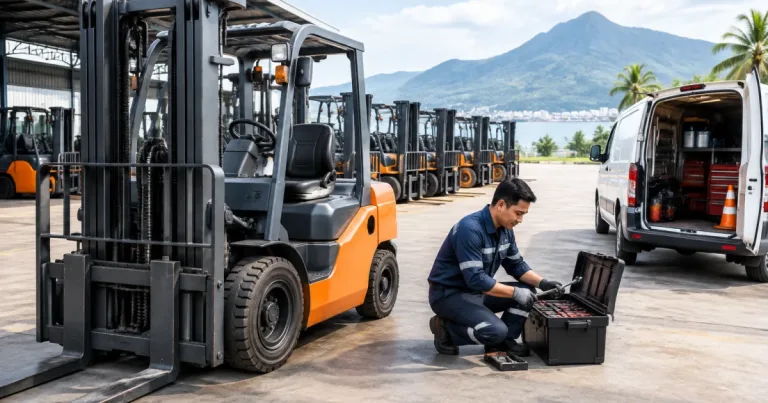
- Service vehicles and tooling: ability to handle common repairs onsite (hydraulics, electrical diagnostics, brakes, tyres).
- Diagnostic capability: access to brand tools/software (where applicable), and experience with fault codes and controllers.
- Escalation path: who handles complex cases, and how quickly.
Preventive maintenance (PM) approach
Uptime improves when PM is systematic. Ask each supplier how they run PM:
- PM frequency recommendations based on usage and environment.
- Whether they provide PM checklists and service reports you can file.
- How they handle follow-up repairs found during PM (quotations, approvals, scheduling).
If you want a deeper view of what good maintenance looks like, you can reference this internal guide: forklift maintenance checklist for Malaysia.
Step 5: Inspect the equipment and validate fit (new, used, or reconditioned)
Now you’ve narrowed to suppliers who can support you. Next, verify that the proposed equipment genuinely matches your application—and that any used or reconditioned unit is in acceptable condition.
What to check during a walkthrough
- Mast and forks: unusual play, chain condition, fork wear, smooth lifting/tilting.
- Hydraulics: leaks, hose condition, cylinder scoring, response under load.
- Tyres and brakes: tread condition, braking consistency, steering response.
- Controls and safety: horn, lights, reverse alarm, seat belt, interlocks (where present).
- Power system: for electric, check battery condition and charging setup; for internal combustion, check start quality and smoke/abnormal noise.
If you’re unsure whether electric or diesel is better for your operating profile, compare trade-offs using: Electric Forklift vs Diesel Forklift.
Validate application fit with simple tests
Ask the supplier to demonstrate performance in conditions similar to yours:
- Lift and travel with a representative load (where safe and practical).
- Turn and stack in aisle widths close to your racking layout.
- Ramp performance (if your site uses ramps or dock plates).
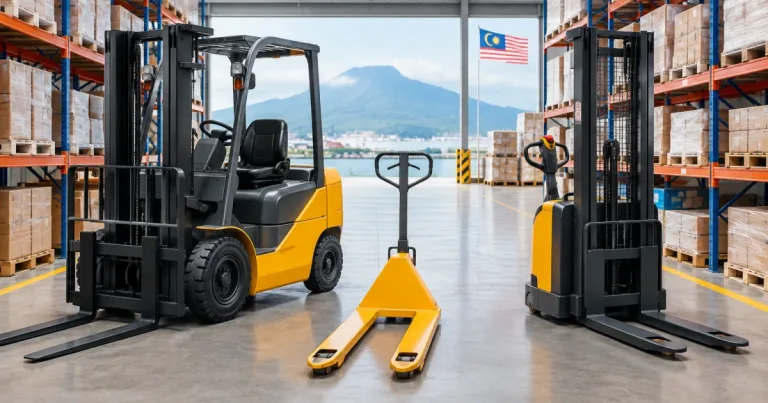
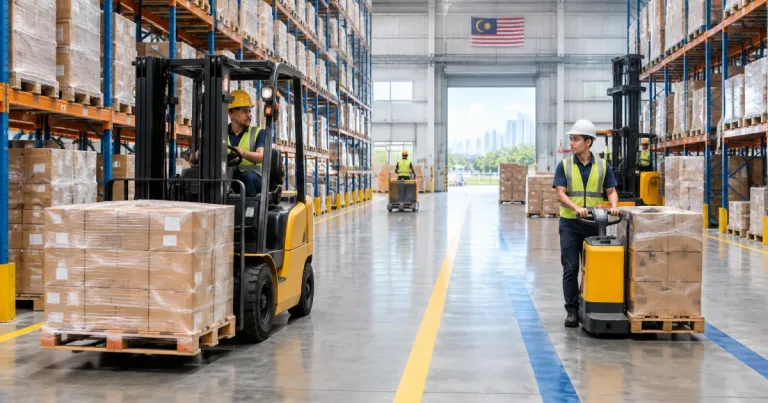
For warehouse-focused operations, reach trucks and pallet handling equipment can dramatically change throughput—so confirm aisle width, lift height, and racking compatibility early.
Step 6: Score suppliers with a simple matrix (and make a defensible decision)
A scoring matrix helps you avoid decisions driven purely by unit price. It also makes internal approvals easier because stakeholders can see how you balanced cost and risk.
Example supplier scorecard criteria
Assign weights based on what matters most to your operation (for many sites, uptime-related categories should carry the highest weight):
| Category | What to evaluate | What “good” looks like |
|---|---|---|
| Parts readiness | Local stock, parts identification process, critical spares list | Clear stock strategy and documented part sourcing |
| Service response | Dispatch process, technician coverage, escalation | Structured workflow and realistic commitments |
| Technical capability | Diagnostics tools, experience with your forklift type | Proven ability to troubleshoot beyond “swap parts” |
| Equipment fit | Capacity, lift height, environment suitability | Demonstrated match to your requirement brief |
| Commercial terms | Warranty clarity, PM packages, rental flexibility | Transparent inclusions and clear exclusions |
| Training and safety | Operator onboarding, refresher options, site-specific guidance | Training available with practical safety focus |
Red flags that should remove a supplier from your shortlist
- Vague answers about where parts come from or who repairs the forklift.
- Service promises without a clear process (no triage, no reporting, no schedule discipline).
- Pushy recommendations that don’t match your written requirement brief.
- Unwillingness to show service history, inspection approach, or maintenance practices for reconditioned units.
If you want additional context on why supplier reliability matters beyond the initial purchase, see: reasons to choose a reliable forklift supplier in Malaysia.
Conclusion: Shortlisting is about risk reduction and long-term uptime
A strong forklift supplier is a partner that can keep you moving when equipment is under pressure—during peak seasons, staffing changes, and unavoidable wear-and-tear. By defining uptime expectations first, screening for parts and service capability, validating equipment fit, and scoring suppliers with a consistent matrix, you’ll make a decision that’s easier to defend internally and easier to live with operationally.
Whether you’re standardising a fleet, adding warehouse capacity with reach trucks, or considering electric and lithium options, a disciplined evaluation process will reduce downtime surprises and improve total cost of ownership over the equipment lifecycle.
Frequently Asked Questions
What should I ask a forklift supplier in Malaysia before requesting a quotation?
Ask how they support your specific forklift type (electric, diesel/petrol, reach truck), where spare parts are stocked, how service dispatch works, and what preventive maintenance options they provide. Then share your operating profile (shifts, loads, aisle widths, environment) so the quotation is based on real usage rather than generic assumptions.
How do I compare forklift suppliers beyond price?
Use a scorecard that weights uptime drivers: parts availability, service response process, technician capability, diagnostics tools, PM reporting, and escalation for complex faults. Price should be evaluated alongside warranty clarity, maintenance inclusions, and rental flexibility for backup coverage.
Why is spare parts availability so important for forklift uptime?
Most downtime is caused by common wear-and-tear components and small electrical or hydraulic issues. If a supplier doesn’t stock fast-moving parts locally or lacks a reliable sourcing process, simple repairs can take much longer—creating avoidable disruption to receiving, production, and dispatch.
What should I check when buying a used or reconditioned forklift?
Inspect the mast and chains for play or wear, check for hydraulic leaks, test brakes and steering, verify tyres condition, and confirm the controls and safety functions work correctly. Ask the supplier to demonstrate the forklift under a representative load (where safe) and provide a clear explanation of what was replaced or refurbished during reconditioning.
Can one supplier support multiple types of material handling equipment for my warehouse?
Yes, many suppliers can support a mix such as counterbalance forklifts, reach trucks, electric pallet jacks, stackers, and even warehouse racking systems. The key is confirming they have the right technicians, parts strategy, and service workflow for each equipment category—especially if you operate across multiple sites such as Peninsular Malaysia and Sabah.
Need a supplier shortlist you can trust for uptime?
AM Forklift Sdn. Bhd. helps procurement teams in Malaysia evaluate and match the right equipment to real operating conditions—backed by practical after-sales support. From new and reconditioned forklifts to electric and lithium options, reach trucks, pallet handling equipment, rentals, maintenance, and operator training, we can help you build a dependable shortlist and a support plan that reduces downtime risk.