Choosing material handling equipment for the first time can feel overwhelming—forklifts, reach trucks, pallet jacks, stackers, racking, batteries, tyres, attachments, and service plans. In Sabah, site conditions matter too (indoor vs outdoor areas, wet weather, and uneven yards), along with your loads and required handling speed.
This beginner guide helps you make a confident starting decision. It covers the main equipment types, the questions to ask, common mistakes to avoid, and a simple step-by-step process. If you’re comparing new vs Used Forklift Sabah options, you’ll also find a practical inspection checklist to reduce surprises.
Step 1: Clarify your job (load, height, distance, and surface)
Start with the work requirement, not the machine type. Many wrong purchases happen when buyers begin with “I need a forklift” instead of “I need to move 1.5-ton pallets to 6 metres in narrow aisles.” Use this checklist to define the job:
- Load weight: typical and maximum (include pallet/bin/cage weight).
- Load size: pallet dimensions, long/bulky items, fragile packaging.
- Lift height: highest put-away point, beam height, and clearance.
- Travel distance: short warehouse shuttles vs longer yard runs.
- Operating surface: smooth floors, ramps, uneven yard, gravel, dock plates.
- Space constraints: aisle width, turning zones, doorway height, container loading needs.
- Duty cycle: occasional use vs daily multi-shift, including peak seasons.
With these basics, you can narrow the choice: counterbalance forklift, reach truck, stacker, or pallet movement equipment.
Forklifts 101: which type fits your facility in Sabah?
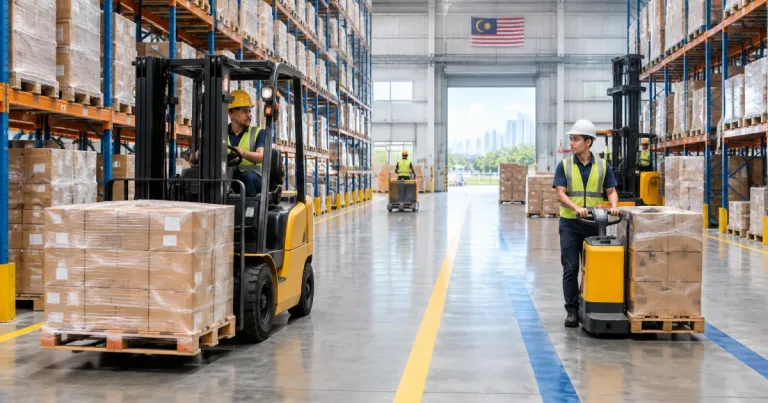
“Forklift” covers several configurations. For most beginners, the first decision is power type and primary operating area. Many Sabah sites combine indoor warehousing with outdoor loading, so you may choose one versatile unit or two specialized machines for better overall efficiency.
Electric forklifts (including lithium battery)
Electric forklifts are common indoors because they are typically quieter, smooth to drive, and avoid exhaust fumes. For businesses considering Electric Forklift Sabah options, electric often suits warehouses, manufacturing lines, and distribution centres with predictable floors.
- Best for: indoor warehouses, cleaner handling areas, sites with ventilation limits, frequent short moves.
- Watch-outs: charging planning and battery management; confirm floors and ramp gradients.
- Beginner tip: if you need longer runtime or quick top-ups, ask about lithium and opportunity charging for your shift pattern.
Diesel and petrol forklifts
Internal combustion forklifts are often chosen for outdoor yards, rougher surfaces, heavier loads, and longer travel distances—especially where ventilation is not a concern.
- Best for: outdoor use, uneven surfaces, heavier loads, longer travel distances.
- Watch-outs: noise and fumes; match tyres and capacity to yard conditions.
- Beginner tip: for mixed indoor/outdoor operations, compare “one unit for everything” vs separate indoor electric and outdoor IC units.
New vs reconditioned vs used
First-time buyers often balance cost and reliability. Used and reconditioned units can reduce upfront spend, but your real goal is low downtime—so suitability and support come first.
When reviewing Used Forklift Sabah listings, confirm the unit fits your job (capacity, mast height, aisle fit) and can be serviced locally with available parts. A low price is not a saving if breakdowns take weeks to resolve.
Warehouse equipment beyond forklifts: reach trucks, pallet jacks, stackers, and racking
Many facilities don’t need a forklift for every movement. Choosing the right mix can reduce congestion, improve safety, and cut operating cost.
Reach trucks for high storage and narrow aisles
Reach trucks are built for racking work in narrower aisles and higher lift heights than typical counterbalance forklifts, helping warehouses increase storage density.
- Best for: high-level racking, narrow aisles, indoor pallet handling.
- Key checks: lift height, aisle width, floor flatness, racking condition, operator skill.
Electric pallet jacks (powered pallet trucks)
Powered pallet jacks move palletized goods horizontally and are often a fast, cost-effective upgrade as a facility grows—especially between receiving, staging, and dispatch.
- Best for: loading bays, short-distance transport, staging areas.
- Key checks: pallet type, ramp angles, dock plate use, turning space.
Stackers for light lifting in tighter spaces
Stackers lift pallets to moderate heights and can suit small stockrooms and low-to-mid racking where a forklift is oversized or budget is limited.
- Best for: lighter loads, smaller warehouses, occasional racking work.
- Key checks: load centre, required lift height, stability on your floor.
Warehouse racking systems: your equipment choice depends on your storage design
Racking defines aisle widths, turning zones, and access methods—so it directly affects what equipment can operate safely. Common options include selective racking (flexible access), drive-in (higher density for similar goods), and very narrow aisle systems (high density with specialized trucks).
Plan racking and equipment together. A common beginner mistake is buying a forklift first, then discovering the aisles are too narrow or the lift height doesn’t match the racking plan.
For broader context, see: Choosing the right material handling equipment for your business in Malaysia.
Step 2: Match equipment to your facility layout (simple measurements that prevent costly mistakes)
Machines with the same rated capacity can perform very differently in your building. Before deciding, measure key constraints and share them with your supplier:
- Aisle width: narrowest working aisle where the truck turns with a load.
- Doorway height and width: include shutters, beams, and tight entries.
- Racking beam heights: highest storage position plus clearance.
- Turning areas: corners near receiving/dispatch are often the tightest points.
- Dock setup: dock levellers/plates, container loading, tail-lift operations.
Think in flows—receiving → staging → put-away → picking → packing → dispatch. Equipment should support that flow without creating bottlenecks.
Step 3: Decide whether to buy, rent, or start with a used unit
Many growing businesses use a mix: buy core equipment used daily and rent extra units for peak periods or short projects. If you’re evaluating Forklift Sabah suppliers, ask if they support sales, rental, and repair so you can scale without switching vendors.
When buying makes sense
- You have steady daily usage and predictable demand.
- You want consistent operator familiarity and standardized maintenance.
- You need specific configurations (mast, attachments, tyres) long-term.
When rental is the safer starting point
- Your workload is seasonal or contract-based.
- You’re still confirming the best specification for your layout.
- You need backup coverage during servicing or repairs.
When a used forklift is a practical option
A used or reconditioned forklift can be a smart entry point if selected for fit and supported properly. Avoid “bargain hunting” and prioritize reliability, service response, and parts availability—especially when searching Used Forklift Sabah due to budget constraints.
A beginner checklist for evaluating a used forklift
- Capacity and load centre: verify rated capacity at your actual load centre (not just headline tonnage).
- Mast and lift height: maximum lift, collapsed mast height (door clearance), and free lift if needed.
- Hydraulics and mast wear: smooth lift/lower, no leaks, minimal play.
- Tyres and braking: correct tyre type for your floor/yard; consistent braking response.
- Battery or engine condition: battery health and charging setup (electric); starting, smoke, and running stability (diesel/petrol).
- Safety essentials: seatbelt, horn, lights, reverse alarm, overhead guard condition.
- Parts and service support: confirm local availability of wear parts and technical support.
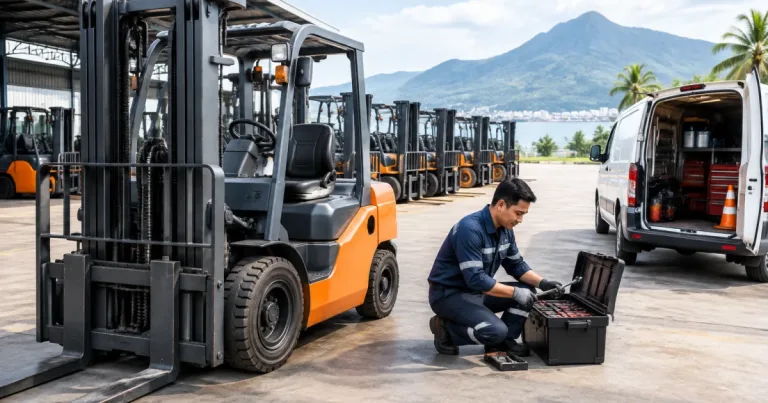
Plan maintenance from day one. Reference: Forklift maintenance checklist to extend forklift lifespan.
Step 4: Don’t forget the “system”: batteries, attachments, training, and after-sales service
Performance depends on more than the truck. Uptime and safety come from the full system: charging routines, operator discipline, service response, and the right configuration.
Power and charging planning (especially for electric fleets)
For electric forklifts, decide where charging happens, manage cables safely, and match charging routines to your shifts. If considering lithium, confirm how opportunity charging fits your workflow and what daily checks operators should perform.
Tyres, attachments, and special loads
If you handle long items, drums, or rolls, you may need attachments (clamps, extensions). Attachments can reduce effective capacity, so confirm the rated capacity with the attachment installed and your typical load centre.
Training and operating discipline
Operator skill strongly affects safety, product damage, rack impacts, and breakdown frequency. Plan training early so safe habits form from the start.
Service support: repair and preventive maintenance
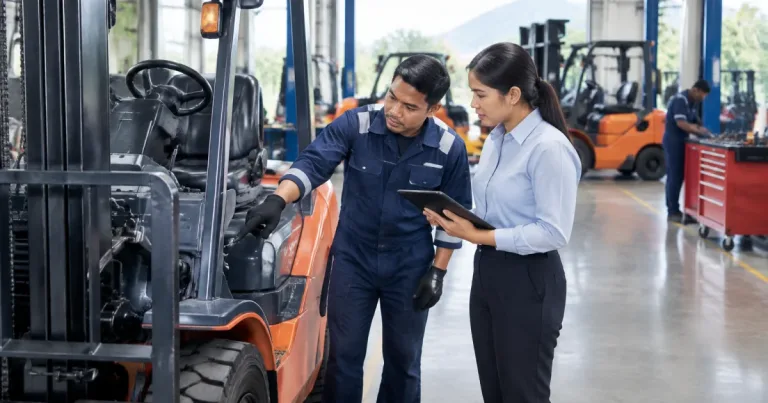
Ask about preventive maintenance schedules, spare parts availability, and repair turnaround. Fast local support matters most when downtime is costly.
If you’re still comparing power types, see: Electric forklift vs diesel forklift: which is better?
Putting it together: a simple beginner selection plan
Use this sequence to decide efficiently:
- List your top 3 loads (weight, size, fragility) and your maximum lift height.
- Map your flow from receiving to dispatch and identify tight points (aisles, doors, docks).
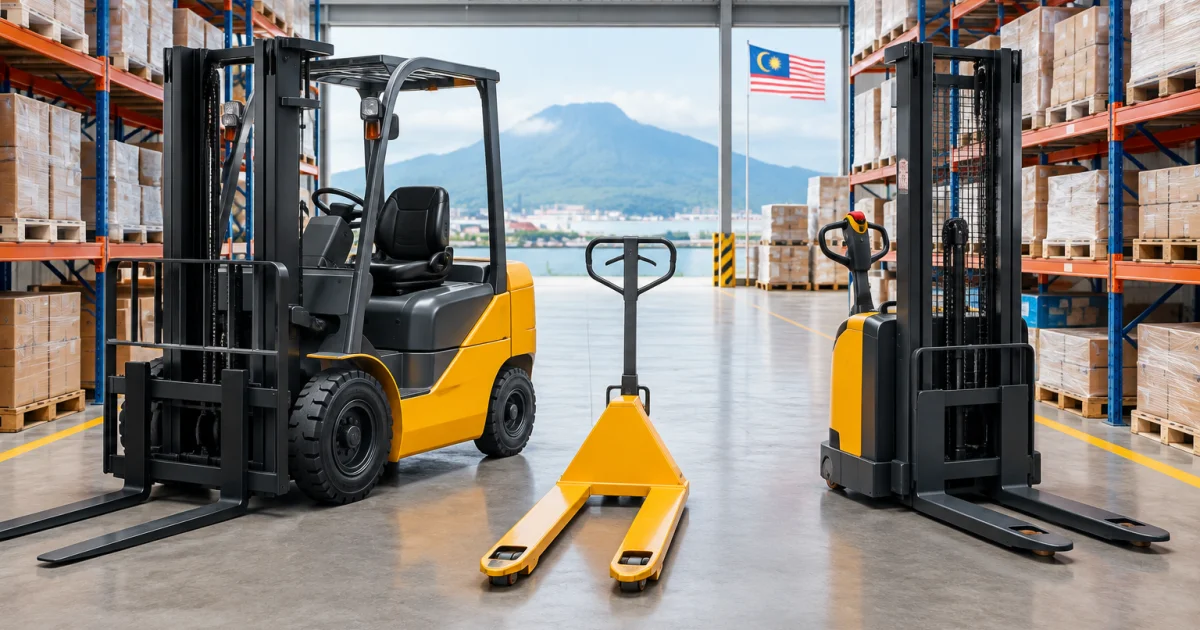
- Choose the primary machine: counterbalance forklift (mixed areas), reach truck (narrow aisles/high racking), or stacker/pallet truck (light warehouse work).
- Choose support equipment: powered pallet jacks for staging; racking that matches access needs.
- Decide buy vs rent vs used based on duty cycle and budget; inspect carefully if used.
- Plan service and training to keep equipment productive and safe.
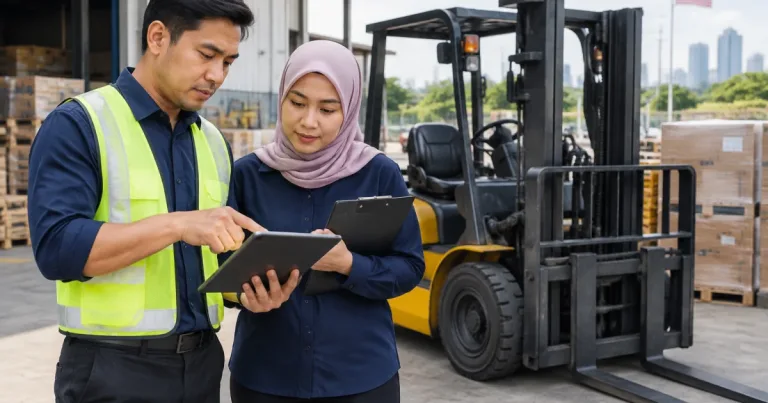
With these basics, supplier discussions become clearer and quotations more accurate. For local options, explore AM Forklift’s Forklift Sabah solutions.
Conclusion: choose for fit, safety, and support—not just price
In Sabah, the right material handling setup is the combination that matches your loads, layout, and operating conditions—backed by training and maintenance that protect uptime. Start with job requirements, then choose equipment (forklift, reach truck, stacker, pallet truck) and racking that work as one system.
If budget leads you to a used unit, treat it as a professional purchase: verify specifications, inspect condition, and confirm local parts and service support. That’s how you capture lower upfront cost without inheriting avoidable risk.
Frequently Asked Questions
What’s the easiest way to choose the right forklift capacity for my facility?
Start with your heaviest typical load (including pallet or container) and confirm the load centre. Then add a safety margin for real-world handling and any attachments. A supplier can help you match capacity to your mast height and attachment needs, because those factors can reduce effective lifting capacity.
Should I choose an electric forklift or diesel forklift for a Sabah site?
Choose based on where you operate most. Electric forklifts are commonly preferred for indoor warehouses and cleaner environments, while diesel/petrol forklifts are often chosen for outdoor yards, uneven surfaces, and heavier-duty work. Many facilities use a mix when they have both indoor storage and outdoor loading.
What should I check before buying a used forklift in Sabah?
Confirm the rated capacity and mast height match your job, then inspect mast wear, hydraulics, tyres, braking, and overall power condition (battery for electric, engine for diesel/petrol). Also verify that spare parts and repair support are available locally, because after-sales service has a big impact on uptime.
When does forklift rental make more sense than buying?
Rental is a good option when your workload is seasonal, your project is short-term, or you’re still testing the right specifications for your layout. It’s also useful for backup coverage during servicing or when you need extra capacity temporarily without committing to a large upfront purchase.
Do I need racking before I select my warehouse equipment?
It’s best to plan racking and equipment together. Racking height, aisle width, and picking method influence whether you should use a counterbalance forklift, reach truck, stacker, or powered pallet jacks. Coordinating both early helps avoid problems like aisles that are too narrow or lift heights that don’t match.
Need help choosing the right material handling equipment in Sabah?
AM Forklift Sdn. Bhd. supports growing operations with complete material handling solutions—new and reconditioned forklifts, electric and lithium options, reach trucks, pallet jacks and stackers, warehouse racking systems, plus forklift rental, repair, preventive maintenance, spare parts, and operator training. Share your load details and layout, and we’ll help you shortlist equipment that fits your facility and budget.