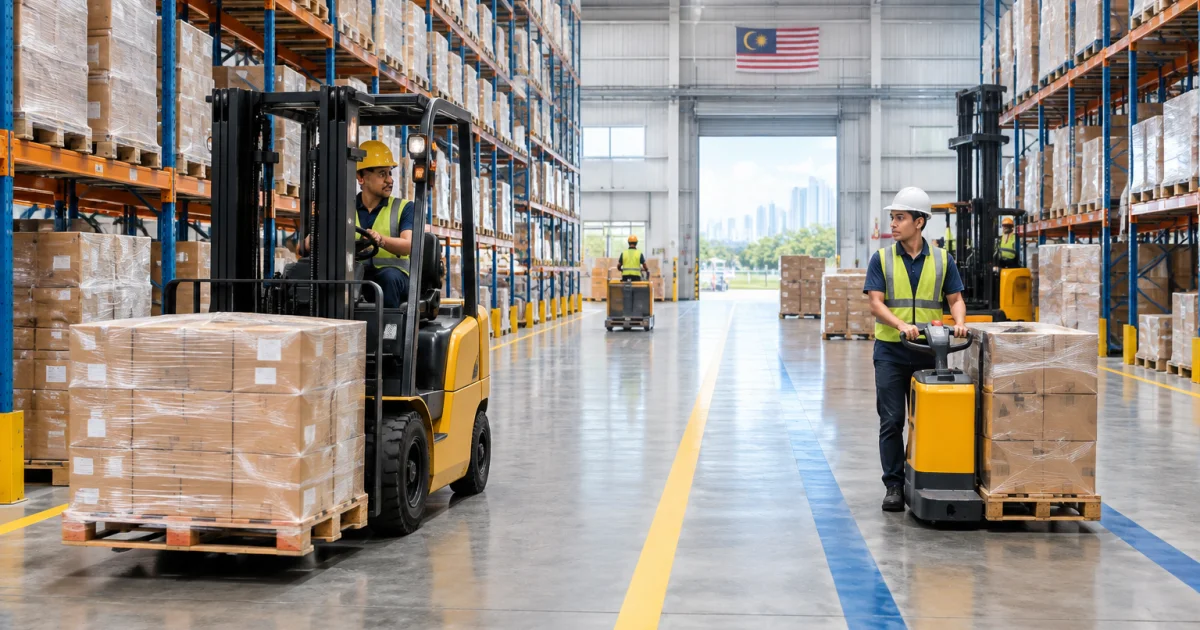
Across Malaysia’s warehouses and manufacturing floors, purchasing teams are aligning on three make-or-break priorities when finalising material handling purchases: safer operations, energy and operating efficiency, and layout fit. The goal is not the newest feature—it’s equipment that reduces avoidable risk, stays productive across shifts, and can be supported quickly when issues arise.
If you are comparing options for Material Handling Equipment Sabah or elsewhere in Malaysia, translate those priorities into a supplier-ready specification: what you will measure on-site, what you will test during evaluation, and what must be stated in the quotation (including after-sales support). This update is for BOFU decision-makers shortlisting models and confirming whether electric, lithium, diesel/petrol, reach trucks, pallet trucks, stackers, and racking will actually work in your facility.
1) Safety first: what buyers are now asking to see (not just hear)
Procurement teams are moving beyond general “safety” claims and focusing on verifiable controls that reduce common incident pathways: blind corners, mixed pedestrian/vehicle zones, unstable loads, and operator fatigue. The expectation is simple: safety features and practices must hold up during a site visit, commissioning, and training.
Practical safety checks to include in your purchase evaluation
- Visibility and traffic flow fit: verify sightlines in aisles, around racking ends, and at dock doors. If typical loads block view, define operating rules (travel direction, spotters) or change truck type.
- Stability with your real loads: validate behaviour with your pallet size, load centre, lift height, and turning needs—not only rated capacity. Reach trucks and counterbalance forklifts handle very differently at height and in tight spaces.
- Braking and control feel: test on your floor conditions where possible. Control modulation matters in narrow aisles and high-stop environments.
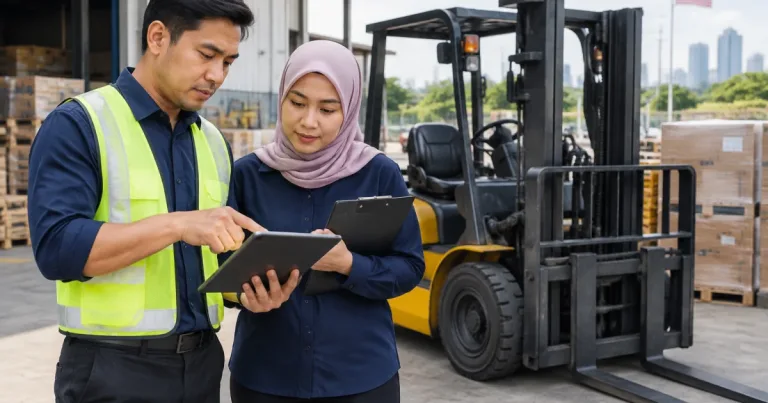
- Operator training plan: require a clear scope (initial + refresher guidance + assessment). HRDF-claimable options can be useful when training multiple shifts in Malaysia.
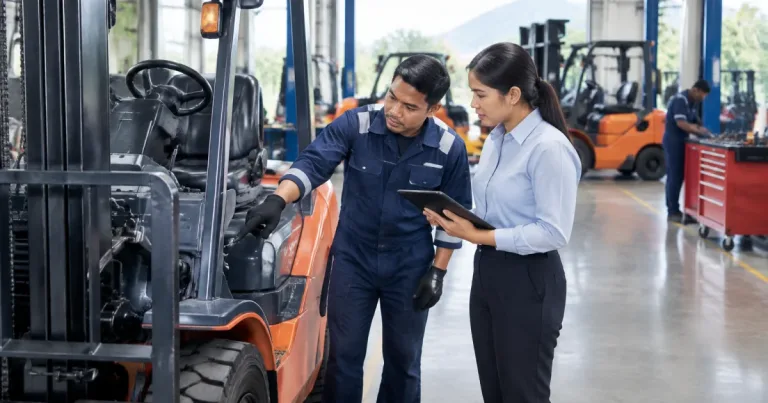
- Preventive maintenance readiness: build in scheduled inspections and reliable access to technicians/spares to avoid operating “until it fails.”
For multi-site operators, safety also means standardised operating rules: consistent daily checklists, lane markings, pedestrian segregation, and battery charging practices. Suppliers that can align equipment, racking, maintenance, and training reduce gaps between these workstreams.
2) Energy and operating efficiency: electric, lithium, or internal combustion?
Energy choices are now evaluated through total operating cost: charging or fuel routines, downtime between shifts, ventilation needs, and how consistent performance remains over time. Many Malaysian buyers start with a practical question: can electric or lithium cover the duty cycle, or does the site still require diesel/petrol due to environment and load demands?
How buyers compare power options in practice
- Electric forklifts: commonly preferred indoors for lower noise and zero tailpipe emissions. Buyers focus on runtime consistency and charging discipline.
- Lithium-ion battery forklifts: shortlisted for opportunity charging and reduced battery handling. Buyers assess charging infrastructure, battery management expectations, and multi-shift performance.
- Diesel & petrol forklifts: often retained for heavy-duty outdoor work, rougher surfaces, and higher-capacity applications. Buyers review fuel logistics, noise, and ventilation if indoor use is expected.
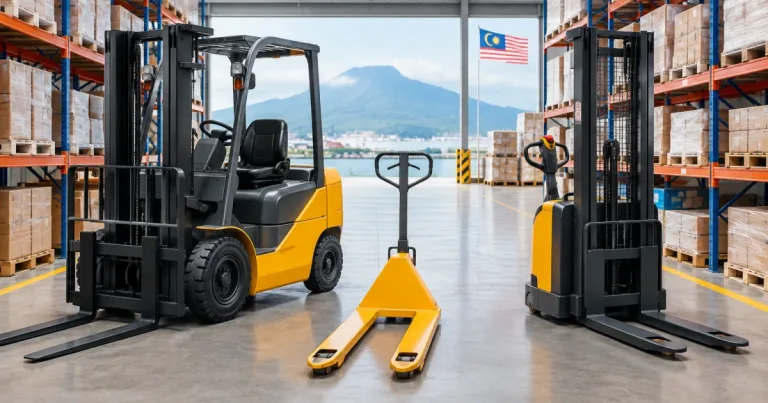
Efficiency also depends on matching the equipment class to the task. Many operations reduce cost and fatigue by using pallet movers for horizontal transport rather than relying on a counterbalance forklift for every movement. This is why searches such as Electric Pallet Trucks Malaysia are common: for staging lanes and short runs, pallet trucks can improve flow at lower acquisition cost.
Ask your supplier to map equipment to workflow—receiving, put-away, replenishment, picking support, staging, and dispatch. A mixed fleet (counterbalance + reach truck + pallet jack/stacker) often reduces congestion and improves throughput more than simply upsizing a forklift.
3) Layout fit: the fastest way to avoid an expensive mismatch
Layout fit is where projects succeed or fail. A forklift that looks right on paper can be wrong in your building if turning radius, aisle width, lift height, and racking clearances don’t align. Buyers are putting more weight on site measurement and application engineering before issuing a final PO.
Key layout factors buyers prioritise during site assessment
- Aisle width and turning: measure the narrowest points (pillars, hose reels, dock levellers, corner guards), not just average aisle width.
- Racking interface: confirm beam height, pallet overhang, pick-face clearances, and load rating. Higher storage only works if racking and aisle design support safe travel at height.
- Floor condition and gradients: ramps, uneven concrete, and indoor/outdoor transitions affect tyre choice and truck suitability.
- Dock and container work: check mast height constraints, overhead obstructions, and whether the truck can work efficiently in containers without bottlenecks.
- Charging or refuelling zones: plan locations and traffic flow so charging/refuelling does not block critical lanes; manage cables and safety separation.
Racking choices are increasingly linked to equipment selection. Selective, drive-in, double-deep, mobile, cantilever, flow rack, and VNA designs each change the truck type required and the training discipline needed. Buyers prefer suppliers who can evaluate racking and equipment together, rather than treating them as separate purchases that must “fit” later.
4) What to demand from a Forklift Supplier Malaysia: beyond the unit price
The most common BOFU mistake is comparing quotations that aren’t equivalent. One quote includes commissioning and familiarisation; another assumes you handle training. One includes a charger or a specific battery; another doesn’t. Without aligned assumptions, unit price becomes misleading.
When you evaluate a Forklift Supplier Malaysia, require a structured quotation and clear inclusions so you can compare like-for-like.
Supplier checklist for purchase-ready evaluation
- Application matching: ask the supplier to restate your use case in writing (load weight, load centre, lift height, aisle constraints, duty cycle).
- New vs used vs reconditioned: if considering reconditioned units, request what was replaced, what checks were performed, and what support is included post-delivery.
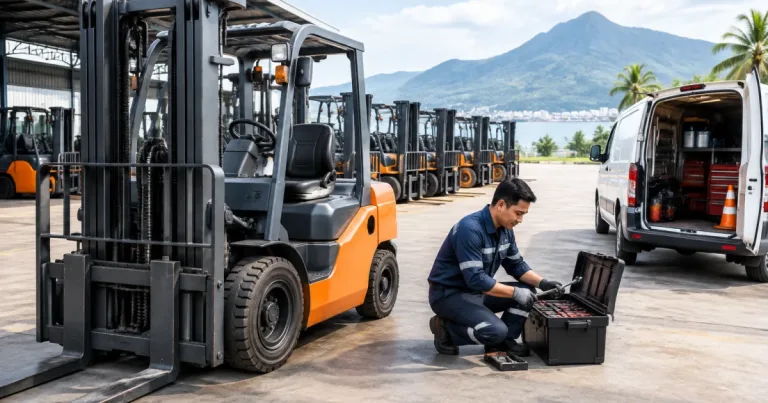
- Parts and service capability: confirm technician coverage, preventive maintenance planning, and spare parts availability for the shortlisted models/brands.
- Rental flexibility: confirm short-term rental options for peaks, projects, or bridging while waiting for new units.
- Operator training availability: ensure training can be delivered on your shifts and aligned to your equipment types (counterbalance, reach truck, pallet trucks/stackers).
In Sabah and East Malaysia, buyers often add a decisive criterion: support responsiveness. For remote sites or uptime-critical operations, service planning and parts access can matter more than small price differences.
5) A practical buying framework you can use this week
To convert priorities into a signed purchase order, use a simple framework that aligns operations, safety, maintenance, and finance while reducing supplier back-and-forth.
Step 1: define your tasks and constraints
- List top movements (e.g., receiving, put-away, replenishment, picking support, dispatch staging).
- Document typical and worst-case loads: weight, dimensions, pallet type, load stability.
- Record site constraints: narrowest aisle, highest lift point, indoor/outdoor transitions, dock conditions.
Step 2: select the right equipment mix (not only one “main” forklift)
- Counterbalance forklift for general loading and flexible handling.
- Reach truck for high-level storage and narrower aisles (where layout supports it).
- Electric pallet jacks and stackers for efficient horizontal movement and light stacking.
- Racking aligned to throughput and storage density goals.
Done well, this step reduces congestion by assigning each equipment type to the lanes where it performs best instead of forcing one forklift to do everything.
Step 3: choose the power strategy
- Electric or lithium for indoor productivity, lower noise, and consistent handling—if charging practices and infrastructure are planned.
- Diesel/petrol for outdoor, heavy-duty work, or conditions that favour internal combustion.
If you are undecided, request a trial or demonstration in your working environment with your real loads and routes.
Step 4: lock the support plan before you lock the purchase
- Agree preventive maintenance frequency and response expectations.
- Confirm operator training scope and schedule.
- Ensure spare parts access for the selected models.
- Decide whether rental units are needed as contingency during peak periods.
For buyers comparing Material Handling Equipment Sabah options, after-sales alignment is often what protects uptime after delivery.
Conclusion: buy for safe throughput, predictable energy cost, and proven fit
Malaysian buyers are not just purchasing a forklift or pallet truck—they are purchasing a material flow outcome. Safety, energy efficiency, and layout fit determine whether equipment delivers that outcome for years, not just on handover day.
To make a confident BOFU decision, insist on application matching, validate manoeuvrability and stability in your real environment, choose a power strategy that fits your duty cycle, and include maintenance and training in the plan. With the right supplier, a coordinated mix of forklifts, reach trucks, pallet trucks/stackers, and racking improves throughput while reducing avoidable risk.
If you want a deeper baseline on equipment selection fundamentals, you can also refer to this guide on choosing the right material handling equipment for your business in Malaysia and these practical benefits of electric forklifts for Malaysian warehouses. For a broader view of solutions across equipment and workflow, see material handling equipment in Malaysia and how it enhances efficiency.
Frequently Asked Questions
How do I choose the right material handling equipment supplier in Malaysia?
Compare more than price. Ask the supplier to restate your application (load, lift height, aisle width, duty cycle) in writing, clarify what is included (commissioning, chargers, training), and confirm maintenance support and spare parts availability for the models you shortlist.
Should I buy an electric forklift, lithium-ion forklift, or diesel/petrol forklift?
Match the power type to your environment and duty cycle. Electric and lithium are often preferred for indoor operations where noise and emissions matter, provided charging infrastructure and routines are planned. Diesel/petrol may remain suitable for heavier outdoor work or tougher surfaces. A site demonstration under your real loads is the fastest way to confirm fit.
What layout measurements matter most before buying a forklift or reach truck?
Focus on the narrowest aisle points, turning space at racking ends, dock and container constraints, highest lift points, floor condition/ramps, and where charging or refuelling will occur. These factors determine whether the truck can operate safely and efficiently, not just whether it fits on paper.
When does it make sense to use electric pallet trucks and stackers instead of a forklift?
They are ideal for frequent horizontal pallet moves, staging, and short runs where a full forklift would be slower or create congestion. They can reduce operator fatigue and free forklifts for tasks that truly require higher lift or heavier handling.
What after-sales support should be included in a forklift purchase or rental decision?
Lock in preventive maintenance planning, technician response expectations, and spare parts support. Also confirm operator training availability for your shift patterns. If your operation has peak seasons, ask about short-term rental options as contingency to protect uptime.
Plan the right equipment mix with AM Forklift Sdn. Bhd.
If you are finalising a purchase and want to prioritise safety, energy efficiency, and true layout fit, AM Forklift Sdn. Bhd. can help you match the right solution to your operation—new or reconditioned forklifts, electric and lithium battery forklifts, diesel and petrol forklifts, reach trucks, electric pallet jacks and stackers, plus warehouse racking systems.
Talk to our team about a site-based recommendation, fleet mix options, rental coverage, preventive maintenance support, and professional operator training (including HRDF-claimable options) so your equipment performs reliably after delivery.