In 2026, forklift rental in Sabah is being shaped by a simple operational reality: project needs change fast, and downtime is expensive. For operations and project managers, the “best” rental provider is no longer defined only by availability—it’s defined by response speed, contract flexibility when scope shifts, and consistent performance across shifts.
This is also changing how teams shortlist vendors. Many start with searches like forklift rental service or Forklift Sabah, then narrow down to a partner that can support specific loads, site conditions, and maintenance expectations. If you’re comparing options across Malaysia, it helps to assess providers like long-term material handling partners—especially if you need a Forklift Supplier Malaysia that can support rentals, service, spare parts, and operator readiness.
Below is a decision-focused guide to what’s driving demand, what “flexible terms” should mean in practice, and how to validate service capability before you sign.
What’s driving the 2026 forklift rental trend in Sabah
Forklift rental has always helped manage cost and capacity. What’s different now is how frequently capacity changes—and how much pressure there is to keep throughput stable during disruption. Common drivers across Sabah include:
- Project-based and seasonal peaks: Construction cycles, manufacturing peaks, and inbound surges may require extra units for weeks or months, then drop back.
- Lead-time and capex caution: Teams delay purchasing until requirements stabilise (capacity, mast height, attachments, battery standardisation). Rental becomes a lower-risk bridge.
- More specialised applications: Tighter aisles and racking increase interest in reach trucks, stackers, and compact electric units—often rented first before buying niche equipment.
- Higher expectations for response time: When a forklift stops, loading bays and production flow can stall. Fast service response is now a core selection criterion.
As these drivers converge, the decision shifts from “who can deliver a unit today” to “who can keep my material handling running with minimal disruption.”
What “flexible rental terms” should include (and what to clarify)
Flexibility only matters when it’s clear in the contract and matches how your operation changes. When comparing providers in Sabah, check four areas: duration, equipment changes, inclusions, and utilisation rules.
1) Duration options that match real project timelines
Flexible terms should cover short- and long-term rental plus reasonable options to extend or reduce timeframes. Clarify:
- Minimum rental period (daily/weekly/monthly) and how partial periods are billed
- Extension process and whether rates change after the initial term
- Early return conditions and any administrative charges
If milestones are uncertain, consider an initial minimum term followed by month-to-month extensions rather than a long lock-in.
2) Swap or upgrade paths when requirements change
On-site realities can differ from the plan: loads are heavier, ramps are steeper, or lift height is higher. A flexible provider should be able to propose alternatives quickly, for example:
- Moving to a higher-capacity diesel forklift for outdoor yards
- Switching to an electric forklift for indoor air-quality or noise requirements
- Adjusting mast type, tyres, or attachments (subject to suitability and availability)
Confirm whether a swap resets the contract, how delivery/collection is handled, and whether the provider does a site suitability check before recommending a replacement.
3) Transparent inclusions: maintenance, wear items, and breakdown coverage
Renting should improve cost predictability—but only if responsibilities are explicit. Ask what’s included and excluded for:
- Preventive maintenance schedule and who coordinates it
- Breakdown support and what counts as normal wear vs misuse
- Tyres, forks, chains, hydraulic leaks, and consumables
- Batteries and chargers for electric or lithium units
For electric rentals, confirm charging responsibility and what happens if the battery underperforms in your duty cycle. For internal combustion units, clarify refuelling responsibility and safe handling expectations.
4) Utilisation rules and site constraints
Some contracts limit operating hours or specify permitted site conditions. Clarify:
- Hour-meter billing, overtime, and weekend usage rules
- Permitted operating surfaces and environmental conditions
- Who is responsible for daily checks and fault reporting
The goal is to prevent a mismatch between assumed conditions and real usage—one of the most common causes of disputes and avoidable downtime.
Faster service response: how to evaluate a provider beyond promises
“Fast response” should mean predictable actions that restore uptime. Move vendor discussions from claims to service mechanics.
Ask about their service model and coverage
- Local technician availability: Do they routinely cover your area in Sabah, and can they support after-hours issues?
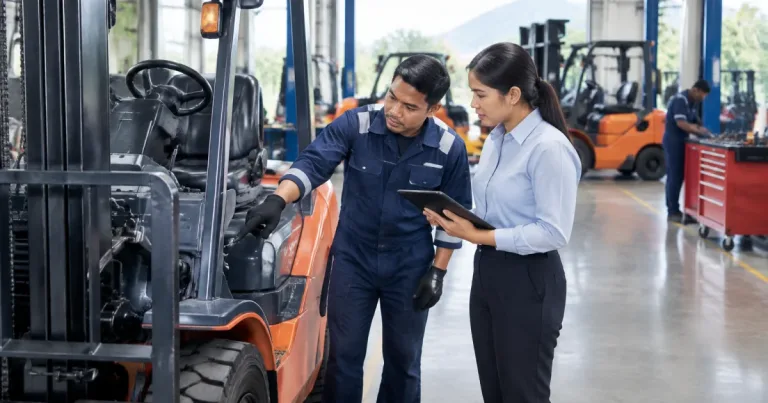
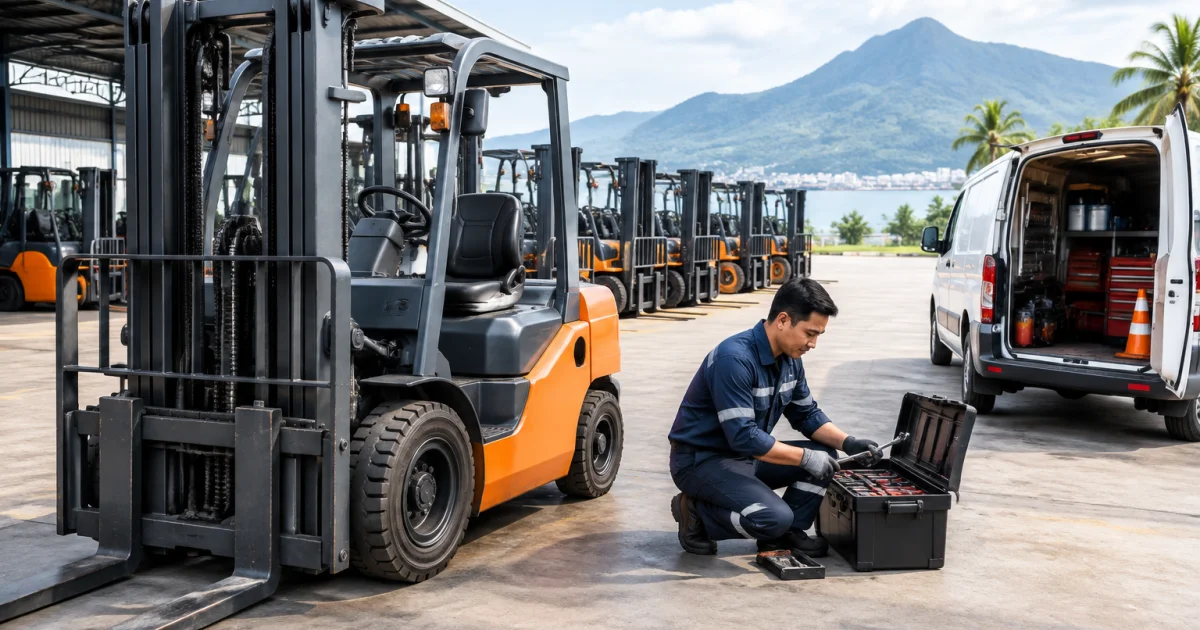
- On-site repair readiness: Are technicians equipped to diagnose and repair common faults on-site?
- Parts access: Do they stock common wear parts and critical spares locally or order per case?
- Escalation path: If a repair takes longer, do they offer a swap, loan, or replacement plan?
You don’t need perfect guarantees; you need a repeatable process for triage, repair, and replacement—especially if you run multi-shift operations.
Check preventive maintenance discipline (it predicts breakdown frequency)
Fast response matters, but fewer breakdowns matters more. Strong providers typically:
- Schedule PM around operating hours to reduce disruption
- Document checks and flag wear items early
- Provide basic operator guidance for daily inspections and safe use
If your throughput is high, ask for PM frequency aligned to your duty cycle, not a generic schedule.
Evaluate communication standards during downtime
Downtime frustration often comes from uncertainty. A service-ready partner should provide:
- Fault acknowledgement and a quick triage call to confirm symptoms
- Clear guidance on whether to stop operations immediately
- Status updates and options if repair cannot be completed quickly
You’re not only renting equipment—you’re buying coordination that protects loading flow and production schedules.
Choosing the right rental unit for Sabah sites: practical fit matters
Availability and price matter, but the right unit choice reduces breakdown risk, improves safety, and lowers disruption. Use these checks to align equipment to your site.
Match the forklift type to the operating environment
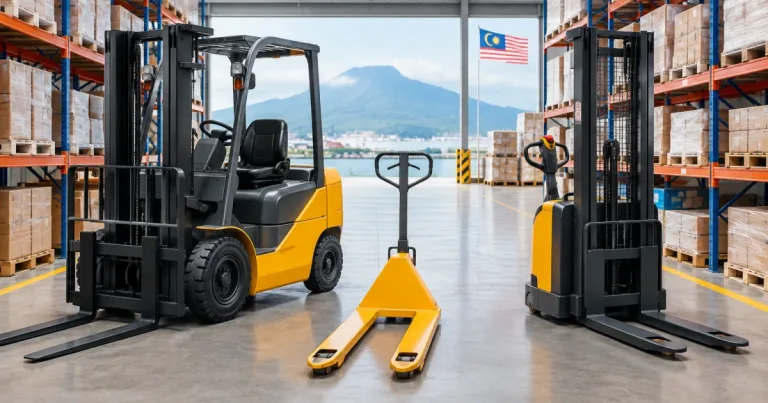
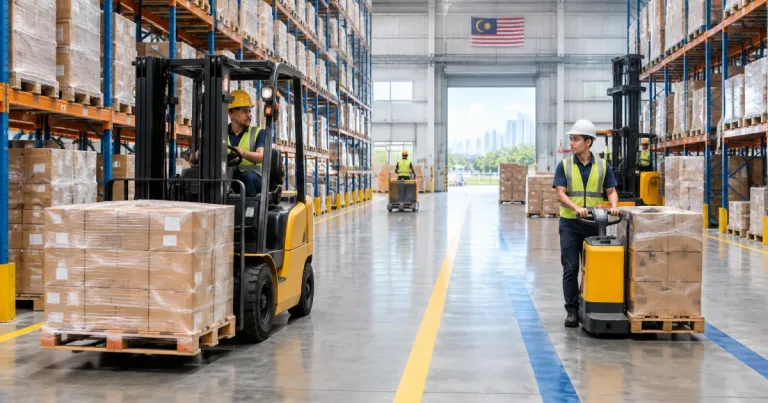
- Electric forklift: Often preferred for indoor warehouses. Confirm battery type, charger compatibility, and shift suitability.
- Diesel or petrol forklift: Common for outdoor yards, rough surfaces, and heavier continuous work. Confirm tyre type and cooling suitability.
- Reach truck: Useful for racking and narrow aisles. Confirm aisle width, rack clearance, and operator competency.
- Electric pallet jacks and stackers: Good for short-distance movement and repetitive tasks where space is tight.
Confirm capacity at the right load centre (not only “rated capacity”)
Selecting by nominal tonnage alone is a common mistake. Longer loads, non-standard pallets, and attachments change effective capacity. Provide:
- Typical and maximum load weights
- Load dimensions (especially depth) and pallet type
- Required lift height and any ramp gradients
- Needed attachments (side-shift, clamps, drum handling, etc.)
Good providers ask this early to reduce the risk of the wrong unit arriving and creating delays, swaps, and downtime.
Don’t overlook operator readiness and site safety
Uptime is also operational. Operators unfamiliar with a model (especially reach trucks) may work slower, make more handling errors, or miss daily checks. If staff rotate, consider suppliers that support operator familiarisation or training—particularly when moving from internal combustion to electric, or introducing lithium-powered equipment.
How to compare forklift rental providers in Sabah (a BOFU scorecard)
To compare vendors consistently, use a scorecard aligned to the 2026 trend: flexibility plus service speed.
| Evaluation area | What to look for | Questions to ask |
|---|---|---|
| Fleet suitability | Range of electric, diesel/petrol, reach trucks, pallet equipment | “What models and capacities can you supply for my lift height and surface?” |
| Contract flexibility | Clear duration options, swap terms, extension/early return rules | “If my project changes, how do we adjust the term or swap units?” |
| Service response process | Triage, dispatch, escalation, replacement options | “If the unit stops mid-shift, what happens step-by-step?” |
| Maintenance discipline | Planned PM with minimal disruption, documented checks | “How do you schedule preventive maintenance for multi-shift use?” |
| Parts and technical capability | Common spares access and technicians who can fix on-site | “Do you stock wear parts locally, and what repairs are typically done on-site?” |
| Operational support | Basic operator guidance, safety alignment, training options | “Can you support operator familiarisation or training if we change equipment type?” |
If you’re also considering purchase, working with a supplier that supports both rental and sales can make rental a practical trial for your duty cycle before you commit to new or reconditioned units.
For additional local context, you can explore AM Forklift’s Sabah page here: Forklift Sabah.
Conclusion: the winning rental partner is the one that protects uptime
The 2026 trend in Sabah is clear: companies want flexible forklift rental terms that match changing needs, plus faster service response that restores uptime with minimal disruption. The best provider combines correct equipment fit, transparent terms, and a service process that holds up under real site pressure.
When shortlisting providers, don’t compare monthly rates alone. Compare how quickly they can swap equipment, how proactively they maintain it, and whether they have technicians and spare parts ready when something goes wrong. Choose a partner that operates like a full material handling equipment supplier—not just a rental desk.
If you’re building a vendor list across Malaysia, these related resources may help: reasons to choose a reliable forklift supplier and a forklift rental guide for Penang and Kedah.
Frequently Asked Questions
What rental terms are considered “flexible” for forklift rental in Sabah?
Flexible terms usually include short- and long-term options, the ability to extend month-to-month, clear early return rules, and a practical swap/upgrade process if your load, lift height, or site conditions change.
How can I verify a rental provider’s service response capability before signing?
Ask about their local technician coverage, on-site repair capability, parts availability, preventive maintenance scheduling, and what their escalation plan is if a repair cannot be completed quickly (for example, a swap or replacement unit).
Should I rent an electric forklift or a diesel/petrol forklift for my Sabah site?
It depends on your environment and duty cycle. Electric forklifts are commonly chosen for indoor warehousing and cleaner operations, while diesel/petrol units are often preferred for outdoor yards, rougher surfaces, and heavier continuous work. Confirm tyre type, lift height, load dimensions, and shift pattern before deciding.
What information should I give a forklift rental provider to avoid getting the wrong unit?
Share maximum and typical load weight, load dimensions (especially depth), required lift height, aisle widths or turning space, floor/surface conditions, ramp gradients, operating hours per shift, and any needed attachments like side-shift or clamps.
Can a Forklift Supplier Malaysia support rentals and longer-term material handling planning?
Yes, many suppliers can support rental, repair and maintenance, spare parts, and even operator training—so you can start with rental to protect uptime and later decide whether buying (new or reconditioned) is a better fit for your operation.
Need flexible forklift rental with dependable support in Sabah?
AM Forklift Sdn. Bhd. provides forklift rental, repair and maintenance support, and a range of equipment options—from electric and lithium battery forklifts to diesel/petrol units, reach trucks, and warehouse handling equipment. If you’re comparing rental providers in Sabah and want terms that match changing project needs, we can help you shortlist the right capacity, plan uptime support, and align the contract to your operation.