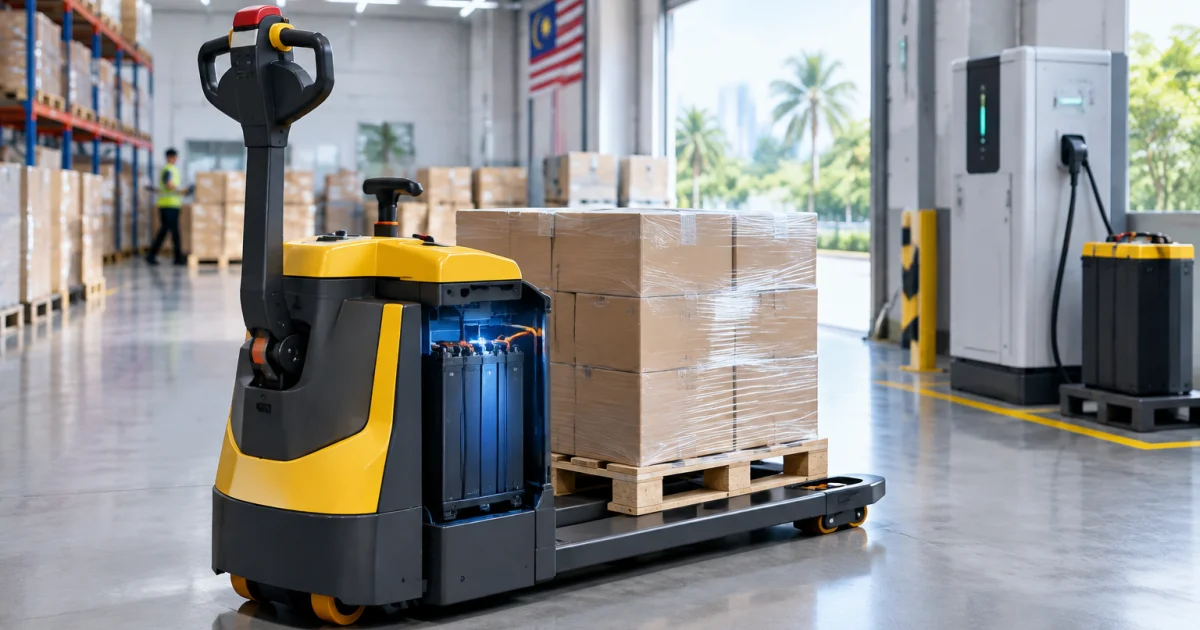
Electric pallet trucks have evolved from “basic warehouse movers” into uptime-critical assets as Malaysian warehouses push higher throughput, tighter aisles, and stricter delivery windows. In 2026, the biggest shifts aren’t only about speed or capacity—they’re about battery management, built-in safety, and how maintenance teams keep fleets available with fewer disruptions.
If you’re evaluating powered pallet handling equipment, you may also be comparing walkie pallet jacks, electric stackers, and compact forklifts. While this guide focuses on pallet trucks, the selection logic mirrors what many teams use when sourcing Stacker Forklift Malaysia solutions: match the duty cycle, charging reality, operator profile, and service support to your operation—not just the spec sheet.
Below are the key 2026 trends and the questions to ask suppliers before committing to purchases, rentals, or a fleet refresh.
1) Battery trends: from “bigger battery” to smarter energy management
Battery behavior is now a primary buying factor. The real question is how the battery performs in your workflow—especially with extended shifts, mixed conditions, and inconsistent charging discipline. Energy management often determines whether electric pallet trucks stay productive or become a bottleneck.
Lithium-ion adoption keeps growing, but fit matters
Lithium-ion remains popular because it can simplify charging and maintain performance more consistently through a shift. It tends to fit well when:
- Opportunity charging is realistic (breaks, staging gaps).
- Consistent travel speed is needed late in the shift.
- Battery handling risks must be reduced (less swapping/manual intervention).
However, lithium isn’t an automatic win. Validate charger placement, electrical capacity, and who owns daily plug-in discipline. A strong battery spec still fails if the site can’t reliably execute the charging routine.
Lead-acid is still relevant—when supported properly
Lead-acid remains viable for fleets that already have chargers, spares, and established battery care. The shift is that successful lead-acid sites are more deliberate about:
- Sticking to charging schedules and avoiding deep discharge.
- Battery room housekeeping and ventilation planning.
- Clear ownership (operators vs. maintenance) for daily checks.
If your operation struggles with consistent handling, paying more upfront for a simpler routine may cost less than recurring downtime from avoidable battery issues.
Better battery information at the truck (and for maintenance)
More trucks now provide clearer state-of-charge visibility and basic alerts, helping operators avoid “end-of-shift surprises.” For maintenance teams, this means fewer emergency callouts and more predictable planning—especially in receiving, dispatch, production feeding, and cross-docking where delays cascade.
2) Safety features are becoming standard—and more behavior-focused
Safety improvements increasingly target common incidents: foot injuries, pinched hands, junction collisions, and loss of control on ramps or uneven floors. Instead of adding complexity, manufacturers are building in protective features that guide behavior and reduce risk during routine work.
More emphasis on pedestrian awareness in busy aisles
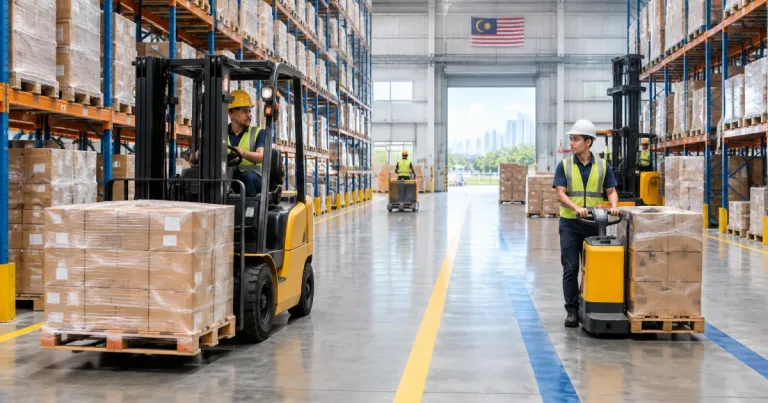
Many Malaysian sites mix pedestrians and equipment in pick faces, dispatch lanes, and staging zones. As a result, buyers are prioritizing trucks that support safer interaction through:
- Speed management suited to tight aisles and turns.
- Stable handling under load to reduce swing and sudden movement.
- Clear operating feedback via simple indicators and predictable controls.
These features help reduce risk without relying only on signage or refresher briefings.
Controls and ergonomics: reducing fatigue-related mistakes
Pallet trucks are often used for hours at a time, and fatigue can quietly increase incident risk. Smoother acceleration, comfortable tillers, and better “feel” under load reduce strain and improve control. Include actual operators in evaluations—if a truck is awkward to maneuver or confusing to use, the spec sheet won’t matter.
Training remains non-negotiable
Better hardware helps, but operator habits still decide outcomes. When introducing new models, battery types, or charging behaviors, treat training as part of the project. This matters even more when multiple equipment classes share the same traffic areas (stackers, reach trucks, forklifts), where right-of-way rules must stay consistent.
3) Uptime trends: fleets are managed like systems, not individual trucks
Uptime in 2026 is less about reacting faster and more about preventing predictable stoppages. Electric pallet trucks can be highly reliable—but only when selection, deployment, and service plans match the duty cycle.
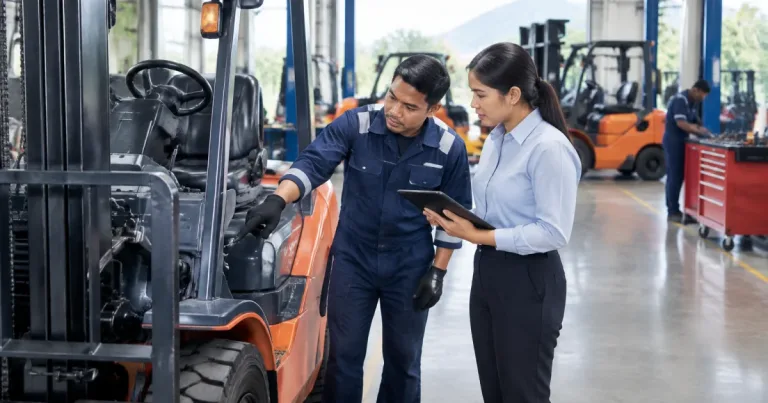
Preventive maintenance is shifting to usage-based planning
Instead of servicing every unit the same way, operations leaders segment fleets by utilization and criticality. Common patterns include:
- High-utilization units in receiving/dispatch get more frequent checks.
- Lower-use trucks follow simpler schedules.
- Spare units are planned to cover peak days and maintenance windows.
This reduces emergency downtime and improves planning for parts, technician time, and replacement cycles.
Battery uptime is operational uptime
For pallet trucks, “downtime” often starts as an energy issue rather than a mechanical failure. Typical uptime killers include:
- Inconsistent charging (trucks returned with low charge).
- Shared chargers with no clear process.
- Using the wrong truck for the job (overloading, long travel, ramp work).
Track not only breakdowns, but also “equipment unavailable” incidents. These near-misses reveal whether you need more chargers, different battery tech, clearer SOPs, or a different equipment mix.
Rental strategies are becoming more tactical
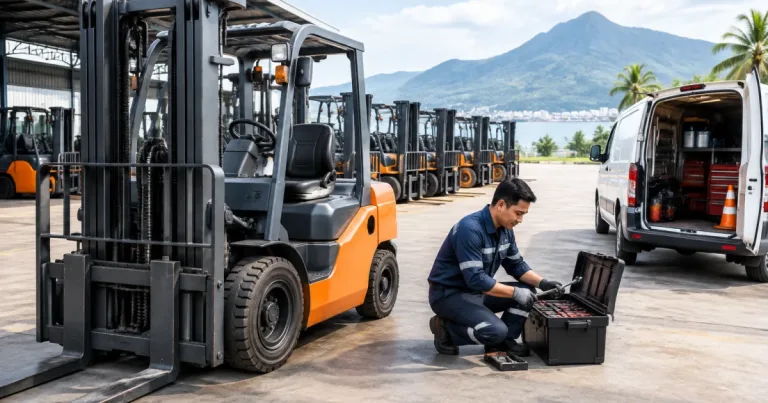
Many Malaysian warehouses now use rental proactively to protect uptime during peaks, expansions, or project work. Rentals are commonly planned for:
- Seasonal volume spikes.
- Temporary layout changes or racking installation projects.
- Trials of new battery types or truck classes before purchase.
This mirrors broader Material Handling Equipment Malaysia decision-making: validate real-world fit and reduce risk before committing to long-life assets.
4) What to check before buying or upgrading electric pallet trucks
Trends help frame decisions, but procurement still comes down to operational fit. Use this checklist when comparing models, battery options, and suppliers.
Application fit: the “three realities”
- Load reality: typical and peak pallet weight, plus load stability (damaged pallets, irregular loads).
- Travel reality: distance per move, ramp use, floor condition, and congestion points.
- Time reality: shift length, break patterns, and whether opportunity charging is truly possible.
These realities determine whether you should prioritize battery capacity, faster charging, tougher drive units, or simply more units to avoid overworking a small fleet.
Support fit: parts, technicians, and response expectations
Uptime is a supplier capability as much as a product feature. Before choosing a brand or model, confirm:
- Availability of common wear parts and battery/charger support.
- Preventive maintenance options and service intervals.
- Whether you can standardize across sites to reduce spare-part variety.
If you also run forklifts (diesel, petrol, or electric), it may be simpler to work with one supplier who can support multiple categories—maintenance, training, and fleet planning under one plan.
Battery and charging setup: plan the “last 10 meters”
Many charging plans fail at the point of execution—where trucks are parked and plugged in at shift end. Walk the site and decide:
- Where trucks will queue without blocking dispatch lanes.
- How you’ll prevent cable damage and keep charger access clear.
- Who is accountable for plug-in compliance and daily checks.
This practical planning often matters more than choosing between two similar spec sheets.
5) How electric pallet trucks fit into a future-proof Malaysian warehouse fleet
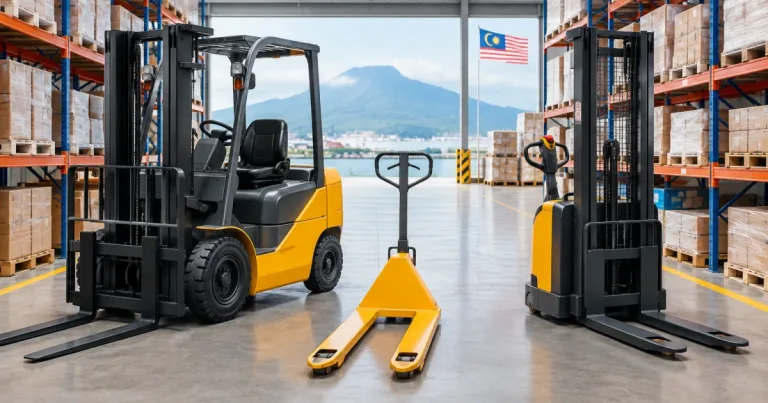
Electric pallet trucks typically operate as part of a wider fleet that may include pallet stackers, reach trucks for higher racking, and forklifts for heavier loads or outdoor work. A future-proof approach is to define roles clearly:
- Electric pallet trucks: fast horizontal movement, loading/unloading, short-to-medium travel with palletized goods.
- Electric stackers: light stacking, mezzanine or low-to-mid racking, space-efficient lifting.
- Forklifts: heavier loads, dock work, outdoor yards, and higher duty cycles where appropriate.
This is where evaluating Stacker Forklift Malaysia options often overlaps with pallet truck decisions: if you need occasional lift but frequent horizontal moves, a mix of pallet trucks and stackers may outperform a one-size-fits-all approach.
For broader upgrades, align equipment selection with storage design. If you’re changing racking, aisle widths, or flow paths, plan the layout and truck choice together to avoid buying equipment that is “almost right” but creates daily friction.
For more background on selecting the right equipment mix, you may find these resources useful:
- Choosing the right material handling equipment for your business in Malaysia
- Electric forklift vs diesel forklift: which is better?
- Electric pallet jacks and stackers product category
Conclusion: choose trends that translate into fewer disruptions
The 2026 story for electric pallet trucks in Malaysia isn’t a single “best” technology. It’s choosing a battery and charging approach your team can execute daily, selecting safety features that reduce common warehouse risks, and building an uptime plan that treats the fleet as a system—equipment, operators, chargers, service support, and workflows.
If you take one action, do a site walk: map high-friction pallet movements, observe how charging is actually done, and list the top reasons trucks become unavailable. That will quickly show whether you need better batteries, better processes, better service support—or a different equipment mix.
Frequently Asked Questions
Are lithium-ion batteries better than lead-acid for electric pallet trucks?
It depends on your duty cycle and charging discipline. Lithium-ion can be a strong fit when you can do opportunity charging and want more consistent performance through the shift. Lead-acid can still be cost-effective if you already have the infrastructure and a disciplined routine for charging and battery care. The right choice is the one your site can operate reliably every day.
What safety features should I prioritise on an electric pallet truck for a busy warehouse?
Prioritise features that reduce common incidents: predictable speed control, stable handling under load, and controls that reduce operator fatigue. Also check how the truck behaves in tight turns, junctions, and on ramps or uneven floors. Pair the hardware with clear traffic rules and operator training to get the full safety benefit.
How do I improve uptime for an electric pallet truck fleet?
Start with a simple system approach: (1) match the truck to the job so you’re not overloading or over-travelling, (2) standardise charging and daily checks so batteries don’t become the hidden downtime cause, and (3) use preventive maintenance based on utilisation—your hardest-working units should be checked more often than low-use trucks.
Should I buy or rent electric pallet trucks in Malaysia?
Buying can make sense when the equipment is used daily and the workload is stable. Renting is useful for seasonal peaks, temporary projects (layout changes, racking work), or when you want to trial a battery type or model before committing. Many operations use a mix: owned units for baseline demand and rentals to protect uptime during peaks.
How do I choose a reliable material handling equipment supplier in Malaysia?
Look beyond the unit price. Ask about parts availability, service response options, preventive maintenance support, and whether the supplier can support multiple equipment categories (pallet trucks, stackers, forklifts, and training). A supplier who can standardise your fleet and support plan often reduces downtime and simplifies operations over time.
Plan your next electric pallet truck upgrade with AM Forklift Sdn. Bhd.
If you’re comparing battery types, safety features, or deciding between purchase and rental, AM Forklift Sdn. Bhd. can help you select electric pallet trucks and related equipment that fit your duty cycle and site layout. We supply electric pallet jacks and stackers, forklifts (new and reconditioned), warehouse racking systems, and provide rental, repair, preventive maintenance, spare parts support, and operator training—so your fleet is easier to manage and stays available when you need it.