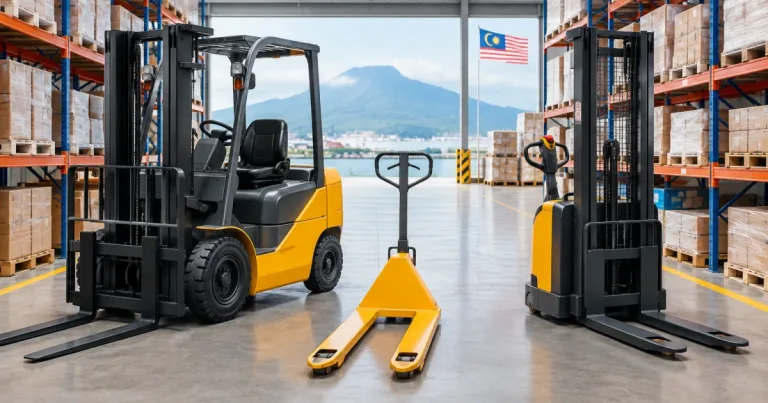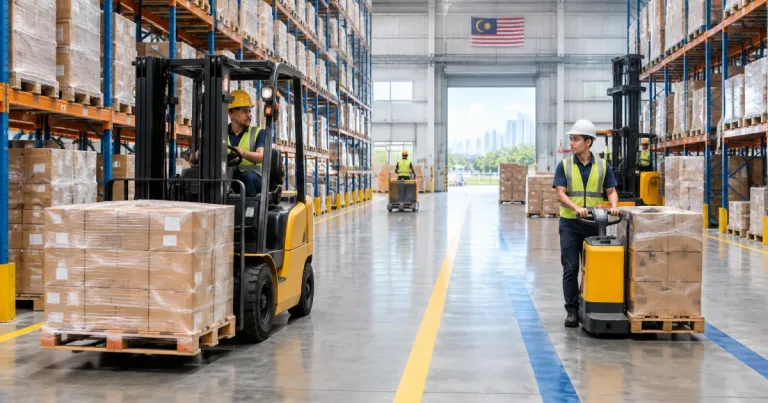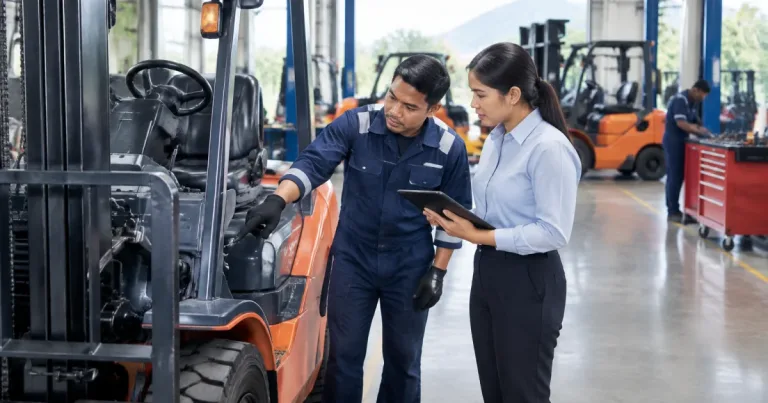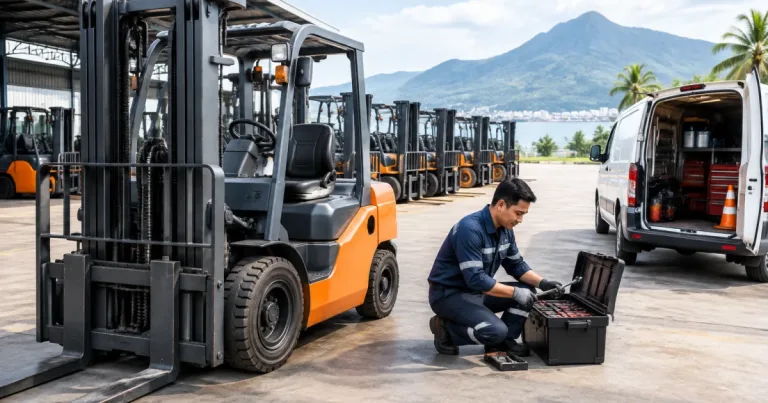
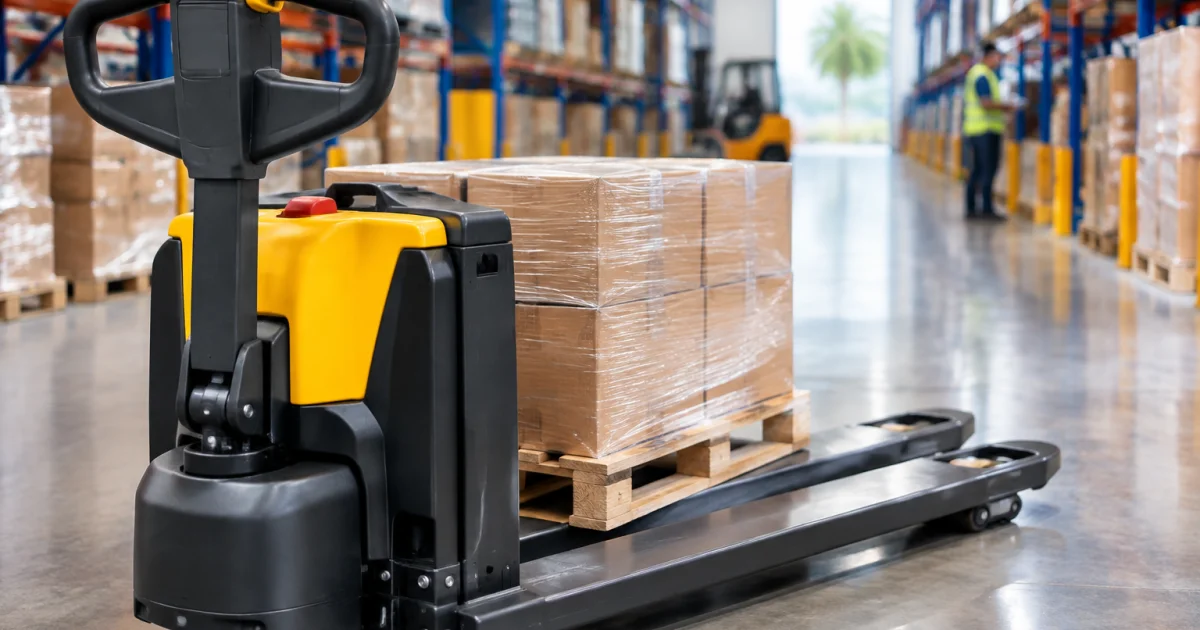
Across Malaysian warehouses and manufacturing sites, powered pallet trucks are being specified more precisely than before. Procurement teams are no longer asking only for “a powered pallet jack”; they’re building quotation checklists around battery type, duty cycle, turning radius, fork configuration, safety functions, and after-sales support. That shift is practical: similar-looking models can perform very differently once you factor in ramp gradients, dock plates, tight aisles, temperature, and the real distance travelled per shift.
This market update explains what businesses commonly request when comparing a Power Pallet Truck Malaysia supplier shortlist—and why those specs are asked for. The aim is to help warehouse supervisors and procurement owners convert daily operating issues into clear, comparable requirements so quotations align to the same performance expectation.
Even if you’re evaluating other material handling equipment, the buying logic is the same: define the load, define the travel path, define the duty cycle, then select the powertrain and safety options that reduce downtime and risk.
Why spec requests are getting more detailed in Malaysia
Most warehouses start with a simple goal: move pallets faster, with less strain and better control than a hand pallet truck. Over time, three common pressures push buyers to be more specific:
- Higher utilisation: Once a powered unit arrives, it often becomes the default mover and quickly runs more hours than expected—revealing battery runtime and charging constraints.
- Mixed environments: Many facilities serve storage and production, so the same unit crosses dock plates, uneven floors, lift doors, and pedestrian zones.
- Safety and downtime scrutiny: Buyers increasingly ask how the truck prevents roll-back on ramps, reduces foot injuries, and avoids battery-related stoppages.
As a result, buyers compare vendors using structured questions: battery chemistry and capacity, walkie vs ride-on, rated capacity at standard load centre, forks that match their pallets, and service turnaround/parts availability. These details predict whether the unit will last in your actual work pattern.
Capacity and load profile: what buyers are really trying to confirm
Rated capacity (kg) is only the starting point. Purchasing teams are usually confirming: (1) whether capacity holds with their pallet geometry, and (2) whether the truck stays stable and controlled when starting, stopping, and turning under load.
Common capacity ranges and what they signal
Many operations request the 1.5–2.5 tonne class because it covers typical warehouse pallets and many manufacturing loads. Requests above that often indicate heavier materials (metal components, beverage, building materials) or a preference for more safety margin. Lower-capacity requests may prioritise compact size and manoeuvrability in tight aisles.
Practical tip: Provide your typical pallet weight, peak pallet weight, and how often peak occurs. This helps avoid oversizing (higher cost, heavier, less agile) or undersizing (struggles on ramps, heats up, wears faster).
Load centre and pallet dimensions
Long or non-standard pallets can shift the effective load centre. More RFQs now include pallet length/width and overhang—helpful because a truck may “lift the weight” but behave poorly under real geometry.
- Share common pallet sizes (e.g., 1000×1200, 1100×1100) and whether they’re stringer, plastic, or skids.
- Clarify if loads are uniform (cartons) or point-loaded (concentrated machined parts).
Walkie vs ride-on: productivity, fatigue, and traffic management
Operating mode—walk-behind (walkie) vs ride-on platform/standing—is a major spec decision. It should be driven by route length, congestion, and shift design rather than preference.
When walkie configurations are commonly requested
Walkie units are commonly requested where:
- Travel distances are short and frequent (pick faces, staging, line-feeding).
- Aisles are tight with frequent turns.
- Pedestrian interaction is high and precise on-foot control matters.
Buyers often request creep speed (turtle mode) for precise positioning at racks, trucks, and production lines, plus ergonomic handle/steering effort details because comfort affects daily output.
When ride-on platforms become a must-have
Ride-on units are favoured for longer runs between receiving, storage, and dispatch. Reducing walking lowers fatigue and can raise throughput and consistency.
Because ride-on units change traffic dynamics, buyers also ask for clearer specs on braking response, horn placement, and speed limitation settings—especially when pallet trucks share lanes with reach trucks and counterbalance forklifts.
Example: some sites prefer walkie control near busy docks but use ride-on units for long internal transfers. In mixed fleets, many standardise on one battery type or brand family to simplify maintenance and spare parts.
Battery and charging: runtime expectations drive most spec requests
Battery questions dominate comparisons because they determine real uptime. Buyers want the battery type and charging approach that fits their duty cycle and charging discipline.
Lead-acid vs lithium: how buyers frame the decision
Lead-acid is often requested for familiarity and established routines. Lithium is increasingly shortlisted for flexible charging and reduced battery-related downtime. The best choice depends on your operating pattern:
- Predictable single-shift operations: scheduled charging windows can be workable with simpler planning.
- Multi-shift or variable peaks: buyers often prioritise opportunity charging and consistent performance across the day.
Useful RFQ fields to include:
- Shifts per day and estimated truck hours per shift.
- Charging bay availability, power points, and ventilation considerations.
- Whether operators can follow charging discipline (a major factor in real uptime).
Battery capacity and “real-world range”
Ah ratings and charge time matter, but the key comparison is whether the truck will clear your busiest day without creating a bottleneck. Ask suppliers to propose a complete battery plan (battery + charger + plug compatibility) and any monitoring that reduces guesswork.
Example: if you run dispatch bursts, you may not need the highest travel speed, but you do need predictable availability between peaks—so battery strategy can matter more than headline specs.
Fork dimensions, pallet compatibility, and the ‘small details’ that stop operations
Fork specs look basic, yet mismatches cause daily friction. Buyers increasingly specify fork length and outside fork width instead of relying on default assumptions.
Fork length and the pallets you actually handle
Standard forks fit common pallets, but longer pallets, permitted double-pallet handling, or custom skids may require non-standard lengths. Too-long forks can create turning/safety issues; too-short forks can destabilise loads or prevent proper entry.
- If pallets are often damaged or inconsistent, ask about fork tip shape and ease of entry.
- If you handle closed-bottom pallets, ask about minimum fork height and clearance.
Lowered height, ground clearance, and floor conditions
Uneven floors, dock plates, and indoor/outdoor transitions drive requests for ground clearance and lowered fork height. These determine whether the unit scrapes, stalls, or damages pallets and flooring.
- List ramps, dock levellers, and rough transition points.
- State whether the truck crosses outdoor areas (rain exposure, debris), even briefly.
- Note low-clearance situations (e.g., pallets on thin boards).
Safety and control features buyers increasingly request
With tighter layouts and mixed traffic, safety requests focus on preventing common incidents: foot injuries, uncontrolled roll-back, harsh stops, and poor visibility near blind corners.
Braking, anti-roll-back, and ramp performance
If your site has gradients—loading bays, ramps, dock plates—treat ramp behaviour as a core spec. Buyers commonly ask how the truck holds on inclines and whether it resists rollback under load. They also ask about braking feel and consistency on dusty or slightly wet floors.
Example: on a dock plate into a container, smooth starts under load can matter more than top speed because they reduce product shift and loss of control in tight space.
Speed control, creep mode, and manoeuvring in tight aisles
Selective racking, narrow aisles, and staging lanes benefit from controlled low-speed movement. Creep mode and predictable steering reduce micro-corrections, improving throughput and lowering collision risk.
Operator presence and emergency functions
Common checklist items include emergency stop access, horn placement, and handle design that reduces accidental contact. If multiple equipment types share lanes, include traffic management in your equipment spec. For example, if you’re also evaluating a BT reach truck, define operating zones and align safety features to those zones.
Durability, environment, and maintenance access: what supervisors want but don’t always write down
Spec sheets can look similar across brands; ownership experience changes with durability in your environment and how quickly issues can be diagnosed and repaired.
Tyres, traction, and floor type
Wheel material affects traction, turning effort, noise, and floor marking. Share your floor type (smooth epoxy, rough concrete, outdoor apron) and ask the supplier to recommend the configuration rather than guessing.
Water, dust, and temperature considerations
If you have washdown areas, high humidity, or dusty manufacturing zones, state it so the supplier can propose a suitable model and maintenance plan. If the truck goes outdoors occasionally, make that explicit so the quote isn’t based on an indoor-only assumption.
Serviceability and parts availability
Support is a buying criterion. Common RFQ questions include:
- Recommended preventive maintenance interval for your duty cycle.
- On-site service coverage for your area.
- Local stock and lead times for common wear parts.
Powered pallet trucks are high-touch units used by many operators. If one goes down, operations often revert to manual handling or wait for forklifts—both disruptive for picking and dispatch.
How buyers are comparing quotations: a spec-driven checklist that avoids hidden mismatches
When you request quotations from Electric Pallet Trucks Malaysia suppliers, the main risk is comparing different assumptions. One vendor may quote a walkie with a smaller battery, another a ride-on with a larger battery; both are “powered pallet trucks,” but suitability and value differ.
Use a structured checklist so every vendor quotes to the same baseline.
RFQ checklist for powered pallet trucks
- Application: receiving, putaway, picking support, line-feeding, dispatch, cross-dock.
- Load profile: typical weight, maximum weight, pallet dimensions, stability issues.
- Travel path: average distance per trip, ramps/dock plates, indoor/outdoor transitions.
- Operating mode: walkie vs ride-on (and why).
- Battery & charging: preferred chemistry, charging window, available power points, charger expectations.
- Fork configuration: fork length, outside width, minimum lowered height (if relevant).
- Safety needs: ramp control, speed limitation, horn/visibility needs, pedestrian-heavy zones.
- Support: maintenance plan, response expectations, spare parts and consumables.
Ask each supplier for a one-page compliance table (“Meets/Exceeds/Alternative”) against every item. This reduces the common outcome where the cheapest quote later reveals limitations that were never aligned up front.
If you’re standardising beyond pallet trucks, align your broader material handling equipment selection approach so fleet choices share consistent service and operator training requirements.
Practical examples: matching common spec requests to real warehouse scenarios
These scenarios explain why certain specs are frequently requested. If your situation matches, the spec is likely worth prioritising; if it doesn’t, you may be paying for capability you won’t use.
Scenario A: Tight racking aisles with frequent short moves
- Common requests: walkie configuration, creep mode, compact turning behaviour, precise low-speed control.
- Why: time is lost in alignment and micro-manoeuvres, not long travel; better low-speed control reduces rack contact.
Scenario B: Long travel between receiving and dispatch
- Common requests: ride-on platform, higher battery capacity, consistent braking, ergonomic controls.
- Why: walking becomes a significant part of the cycle; fatigue affects speed and safety by end of shift.
Scenario C: Dock plates, ramps, and mixed indoor/outdoor transitions
- Common requests: ramp stability behaviour, traction-appropriate wheels, controlled start/stop under load, practical ground clearance.
- Why: the biggest risk is loss of control on gradients and transitions; flat-floor demos can hide dock issues.
Scenario D: Shared lanes with forklifts and reach trucks
- Common requests: predictable speed control, horn placement, clear operating procedures, consistent fleet training.
- Why: interaction risk rises in mixed traffic; equipment selection and operator behaviour must work together.
If you’re reviewing forklift mix (electric vs diesel), coordinate decisions so power and maintenance strategies stay coherent, as discussed in Electric Forklift vs Diesel Forklift.
What to ask suppliers before you place an order (or sign a rental agreement)
Even with a strong spec sheet, clarify verification and deployment to avoid surprises:
- Site assessment: can the supplier review aisles, dock plates, and pallet types to confirm fit?
- Demonstration conditions: can you test with your typical pallet weight and real ramps/transitions?
- Maintenance plan: what’s included vs excluded, and how are consumables handled?
- Operator training: will they provide familiarisation and safe-use guidance?
- Downtime strategy: if the unit is critical, is there a loan unit, rental option, or swap process?
Some businesses rent first to validate fit, especially with uncertain duty cycles or seasonal peaks. If you need multiple units or additional warehouse equipment, a supplier that supports a full range can help keep specifications and servicing consistent. For reference, see Pallet Trucks for common product groupings used in quotations.
Conclusion: build your quote shortlist around the job, not the brochure
Powered pallet trucks are often treated as “simple” equipment, but successful buyers in Malaysia define the job clearly and specify accordingly. The most requested specs—capacity matched to pallet geometry, walkie vs ride-on mode, a battery and charging plan aligned to shifts, fork compatibility, ramp-safe control, and reliable service support—are all methods for protecting daily uptime.
When you translate warehouse reality into a structured RFQ checklist, supplier quotations become directly comparable and easier to justify internally because each requirement links to a real constraint: travel distance, congestion, dock conditions, duty cycle, or safety risk.
For added confidence, ask shortlisted suppliers to validate assumptions with a site walk-through or a practical demo using your loads. It’s often the fastest way to confirm the specifications your operators actually need.
Frequently Asked Questions
What specs should I include when requesting a quote for a powered pallet truck in Malaysia?
Include application (receiving/dispatch/line-feeding), typical and maximum pallet weight, pallet dimensions, travel distance, ramp or dock plate use, walkie vs ride-on preference, battery type and charging window, fork length/width, and the service/support expectation (preventive maintenance and response time). A simple compliance table (Meets/Exceeds/Alternative) makes quotations easier to compare.
Is a walkie or ride-on power pallet truck better for my warehouse?
Walkie units are usually better for short moves, tight aisles, and pedestrian-dense areas where precise low-speed control matters. Ride-on units tend to fit longer travel routes where reducing operator walking improves throughput and reduces fatigue. The best choice depends on your route length, congestion, and how often the truck crosses ramps or dock areas.
How do I choose between lead-acid and lithium batteries for electric pallet trucks?
Start with your duty cycle and charging discipline. Lead-acid can work well when you have predictable shifts and a dedicated charging routine. Lithium is often shortlisted when operations want more flexible charging patterns and consistent availability across variable peaks. Ask the supplier to recommend a battery and charger plan based on your shifts, available charging location, and busiest-day usage.
What fork dimensions matter most when buying an electric pallet truck?
Fork length and outside fork width should match the pallets you handle most often. Also consider lowered fork height (for low-clearance pallets), fork tip shape (easier entry into damaged pallets), and ground clearance if you cross dock plates or uneven floors. Providing your pallet types and any problem areas helps the supplier propose the right configuration.
Can AM Forklift Sdn. Bhd. help me evaluate powered pallet truck specs alongside other material handling equipment?
Yes. AM Forklift Sdn. Bhd. supports a broader range of material handling equipment Malaysia operations commonly use—including electric pallet jacks and stackers, reach trucks, forklifts (electric, lithium, diesel/petrol), warehouse racking systems, plus rental, repair/maintenance, and operator training. That allows you to align specifications, servicing, and safe-use practices across the fleet.
Shortlist the right powered pallet truck specs with AM Forklift Sdn. Bhd.
If you’re collecting quotations and want to avoid mismatched assumptions, AM Forklift Sdn. Bhd. can help you translate your load profile, travel path, ramps/dock conditions, and shift pattern into a clear powered pallet truck specification checklist. We also support end-to-end solutions—electric pallet jacks and stackers, reach trucks, new and reconditioned forklifts, warehouse racking systems, plus rental, repair/maintenance, and operator training—so your equipment choices stay consistent and supportable.
Share your pallet size, typical/max load, and daily operating pattern, and we’ll help you identify the practical specs to request for accurate comparisons.