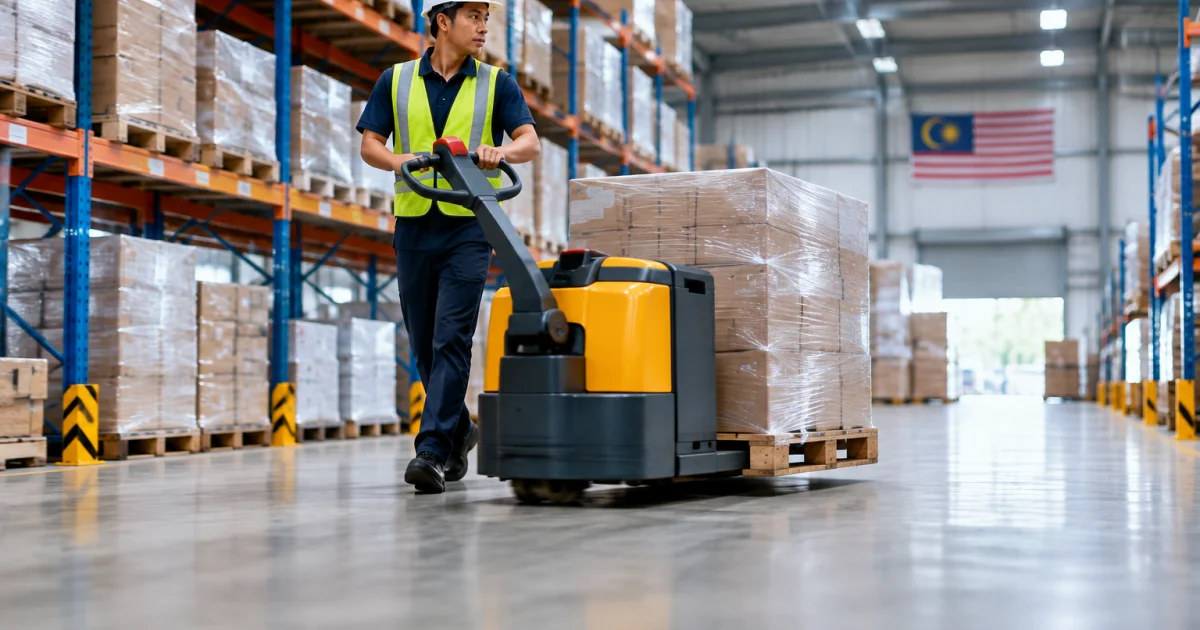
Walk through a busy warehouse today and you’ll notice a clear shift: more teams are moving pallets with powered units instead of relying only on manual hand pallet trucks. This isn’t “automation for automation’s sake.” It’s a practical response to tighter delivery windows, heavier average pallet weights in some sectors, labour constraints, and the desire to reduce day-to-day strain on operators.
For teams evaluating Electric Pallet Trucks Malaysia options, the question usually isn’t whether electric pallet trucks are good. It’s when they become the better choice for your layout, throughput, and workforce—and when manual pallet jacks still make more sense. This article explains the main drivers behind the switch, where electric pallet trucks deliver the biggest gains, common situations where manual still wins, and a simple checklist to use before speaking with suppliers.
What’s really driving the switch in Malaysian warehouses
These drivers aren’t identical for every facility, but they show up repeatedly when managers review shift performance, incident logs, and fulfilment pressure over time:
- More internal travel per shift: As SKUs expand and pick faces spread out, operators spend more time moving pallets between receiving, staging, storage, and dispatch.
- Higher expectations for speed consistency: Not just peak speed, but steady output across a full shift—especially during loading/unloading windows.
- Fatigue becomes a real bottleneck: Manual pallet movement is physically demanding, and performance often dips later in the shift.
- Safety and product damage concerns: Jerky starts/stops and awkward manoeuvres can increase the chance of minor incidents, especially in narrow aisles or busy staging zones.
- Pressure to modernise material handling: Many sites are upgrading broader Material Handling Equipment Malaysia setups, making powered pallet movement an obvious gap to close.
In practice, electric pallet trucks are often adopted not because manual tools “don’t work,” but because manual movement becomes the weakest link once other parts of the workflow improve.
Where electric pallet trucks deliver the biggest operational wins
Electric pallet trucks (often called electric pallet jacks) perform best in tasks where they remove friction from repetitive workflows and reduce the effort required per move.
1) High-frequency pallet transport on flat, predictable routes
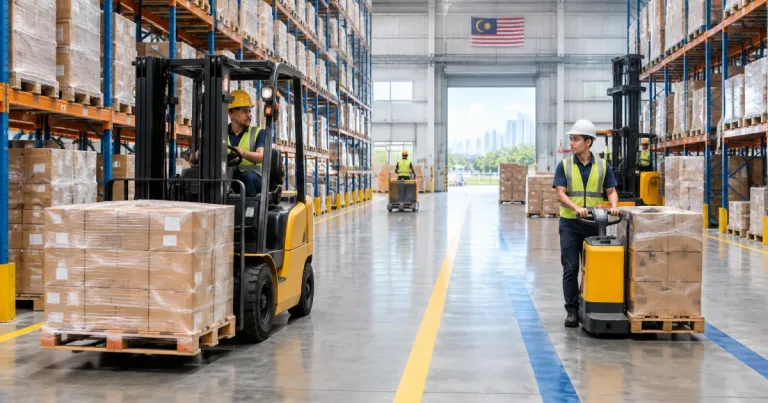
If your team repeatedly moves pallets between a few core zones (for example, receiving to staging, staging to dispatch, or cross-dock lanes), powered travel and lift can reduce time-per-move and keep pace more consistent. The advantage is strongest when the route is long enough for speed to matter but controlled enough that congestion doesn’t cancel out the benefit.
2) Truck loading/unloading and dock-side staging
Docks are where small delays quickly snowball. Powered units help maintain smooth pallet flow during loading and unloading, particularly when operators handle many similar moves in a short window. In warehouses that also run forklifts, pallet trucks typically complement rather than replace them: forklifts handle heavier lifts and stacking, while pallet trucks keep horizontal movement continuous.
3) Handling heavier pallets without exhausting operators
Even when a manual pallet truck can technically move a load, the push/pull force adds up across dozens or hundreds of trips. Powered traction reduces the effort required and helps maintain steady productivity. This is not a medical claim—just the reality of repetitive force and fatigue over time.
4) Narrow aisles and tighter turning areas (with the right model)
Not every powered pallet truck fits every tight space. But when the model is correctly sized and aisle discipline is maintained, powered control can improve manoeuvring confidence and reduce abrupt movements. Spec selection matters: turning radius, fork length, and overall footprint should match your real aisle and staging constraints.
When a manual pallet truck may still be the smarter choice
Switching to electric isn’t automatically better. Being clear about where manual remains practical can prevent disappointing ROI.
- Very low daily movement volume: If the unit sits idle most of the day, the payback period may be too long.
- Highly congested lanes: If operators constantly stop for people, forklifts, or mixed traffic, speed advantages fade.
- Rough floors or inconsistent surfaces: Floor condition affects traction, stability, and maintenance needs for any wheeled equipment.
- Short, occasional moves: For quick repositioning, manual trucks can remain the simplest solution.
- Limited charging discipline: Without a reliable charging or battery-swapping routine, powered units can be unavailable at the worst time.
Many well-run warehouses use a mix: manual units for light or infrequent tasks, electric units for repetitive, time-sensitive routes.
A practical checklist: does switching make sense for you?
Use this checklist before requesting quotations. You don’t need perfect measurements—just a clear picture of your workflow.
Step 1: Map your “top 3” pallet routes
Identify your three most common pallet movements (e.g., receiving to QC, QC to storage, storage to dispatch). For each route, note:
- Approximate distance and typical congestion points
- Average pallet weight category (light/medium/heavy for your operation)
- How many trips per shift (a rough estimate is fine)
- Any slopes, dock levellers, or floor transitions
If one route dominates labour time, that’s often where a powered pallet truck pays back first.
Step 2: Decide what you want to improve (pick two priorities)
Decisions move faster when you align on a small set of outcomes. Common priorities include:
- Increase throughput consistency across shifts
- Reduce operator fatigue and strain
- Improve dock turnaround time
- Lower minor product damage from rough handling
- Standardise equipment as part of broader warehouse upgrades
Step 3: Choose the right category of powered pallet truck
In Malaysia, terminology varies across teams and suppliers—electric pallet truck, electric pallet jack, and the procurement phrasing Power Pallet Truck Malaysia. What matters is matching the category to the job:
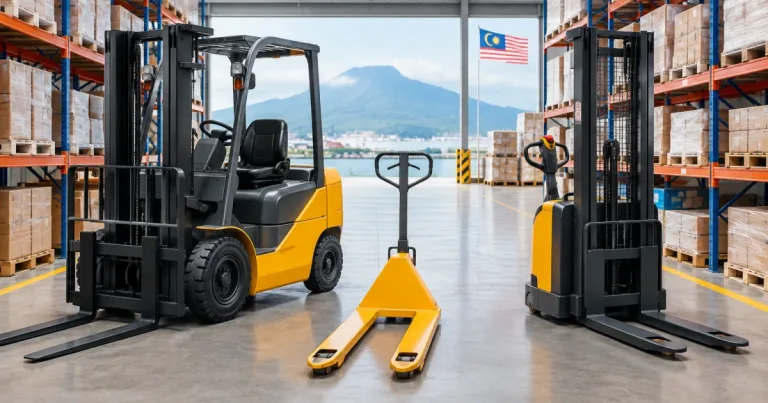
- Walk-behind electric pallet trucks: A common first step up from manual for general movement and dock work.
- Ride-on pallet trucks: Better for longer travel distances and many trips per shift, where consistent speed matters.
- Electric pallet stackers: If you need lift to racking or staging heights (not only floor movement), a stacker may be more appropriate.
If your main problem is access to higher storage levels, you may need reach trucks instead. Choosing the right mix of tools matters more than choosing “electric everything.”
Step 4: Pressure-test your site constraints
Before you commit, validate the operational details that often determine success:
- Aisle width and turning space: Measure key areas like staging corners and dock entrances.
- Floor condition: Uneven patches and debris increase wear and reduce handling smoothness.
- Battery and charging plan: Define where charging happens, who owns the routine, and what “ready-to-use” looks like daily.
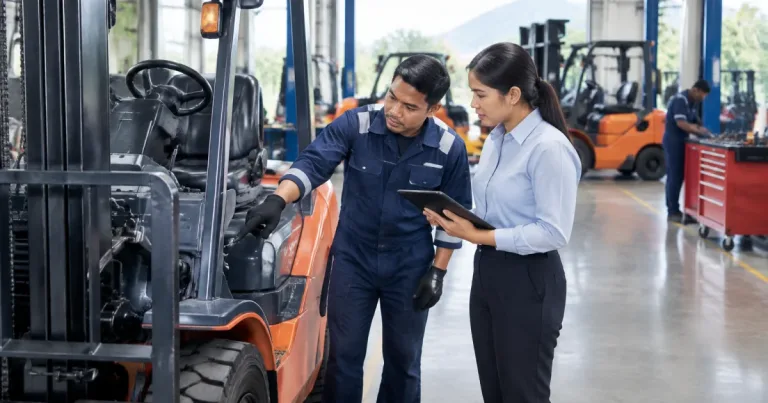
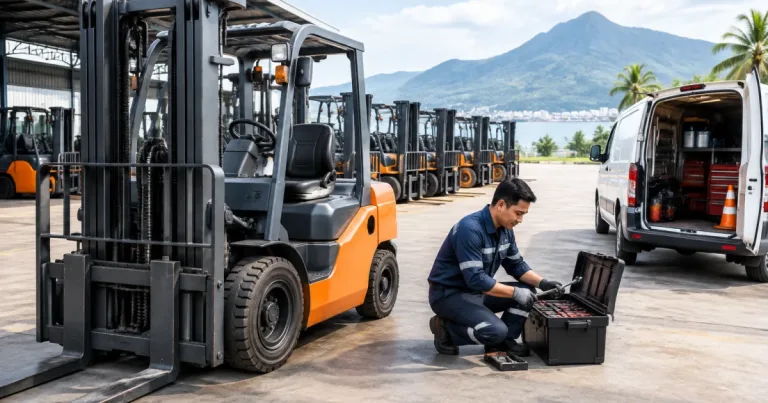
- Service support: Confirm maintenance coverage, parts availability, and preventive schedules.
These practical constraints often decide whether operators embrace the equipment or avoid it.
How electric pallet trucks fit with forklifts, reach trucks, and racking
Equipment choices work best when treated as a workflow system. Electric pallet trucks typically support horizontal pallet flow, while other machines handle height and heavier lifts:
- Forklifts vs pallet trucks: Forklifts are ideal for stacking, heavier loads, and varied tasks. Pallet trucks are ideal for fast floor-level transport of palletised goods.
- Reach trucks in racking-heavy warehouses: Reach trucks handle vertical putaway/retrieval in narrow aisles; pallet trucks support staging, replenishment, and dock movement.
- Racking layout influences travel: Selective racking, VNA concepts, and flow rack zones change where pallets accumulate and how often they must be moved. When racking is redesigned, it’s a good time to reassess pallet movement routes and whether powered pallet trucks should be added or upgraded.
If you’re planning broader upgrades, it can help to review your setup against a wider Material Handling Equipment Malaysia plan rather than purchasing one item at a time.
For related reading as you compare equipment types, you may find these guides helpful: Electric forklift vs diesel forklift: which is better for your business and Top benefits of electric forklifts for Malaysian warehouses.
Conclusion: switch for the workflow, not for the trend
Warehouses are adopting electric pallet trucks because the day-to-day reality of pallet movement has changed: higher throughput expectations, longer internal travel, and the need to protect both people and product while keeping operations steady. But the right move isn’t automatic—it’s a targeted decision based on routes, congestion points, pallet weights, and discipline around charging and maintenance.
If you’re considering Electric Pallet Trucks Malaysia solutions, begin with a route map and two clear priorities. Then choose the right unit type (walk-behind, ride-on, or stacker) and validate constraints such as aisle width, floor condition, and service support. Done well, a powered pallet truck becomes a practical upgrade that improves daily flow and consistency.
To explore different powered pallet options and related warehouse equipment, you can also browse Electric Pallet Jacks & Stackers, review pallet truck options, or read a broader overview of material handling equipment in Malaysia.
Frequently Asked Questions
Is an electric pallet truck the same as an electric pallet jack?
In most workplaces, yes. “Electric pallet truck” and “electric pallet jack” are commonly used interchangeably to describe a powered pallet-moving unit used at floor level. The key is to confirm specifications (capacity, fork length, turning radius, battery type, and whether it’s walk-behind or ride-on) rather than relying on the name alone.
When does it make sense to choose a ride-on power pallet truck instead of a walk-behind model?
A ride-on model typically makes more sense when operators travel longer distances, make many trips per shift, or need to maintain consistent speed across a large facility. Walk-behind units are often sufficient for shorter routes, dock work, and general pallet movement in tighter spaces—provided the unit is correctly sized for the aisle and turning areas.
Do electric pallet trucks replace forklifts in a warehouse?
Usually not. Electric pallet trucks are best for horizontal transport of palletised goods at floor level. Forklifts and reach trucks are used when you need to stack, work at height, or handle heavier or more varied loads. Many warehouses use both: forklifts for lifting and racking tasks, pallet trucks for fast staging and dock movement.
What should I check before buying electric pallet trucks for my Malaysian warehouse?
Start with your real workflow: top pallet routes, daily trip volume, pallet weights, and congestion points. Then confirm practical constraints such as aisle width, floor condition, gradients at dock areas, battery/charging routines, and your maintenance plan (service support and parts). A short on-site assessment often prevents costly spec mismatches.
Can electric pallet trucks work with racking systems and reach truck operations?
Yes. In racking-heavy warehouses, reach trucks typically handle high-level putaway and retrieval, while electric pallet trucks support staging, replenishment, and dock-to-staging flow. If you’re changing racking layout (selective, VNA, drive-in, or flow rack zones), it’s a good time to reassess pallet movement routes and whether powered pallet trucks should be added or upgraded.
Plan the right electric pallet truck setup with AM Forklift Sdn. Bhd.
If you’re weighing a switch to powered pallet movement, AM Forklift Sdn. Bhd. can help you match the right electric pallet truck or stacker to your routes, aisle space, pallet weights, and charging routine. As a one-stop material handling supplier, we also support related needs such as forklifts, reach trucks, warehouse racking systems, rental, repair & maintenance, and operator training—so your equipment works as a complete warehouse system, not a one-off purchase.